Buying an organic fertilizer for the wrong nutrient wastes money and can still leave plants hungry, because most organic materials take one to four months to release what they contain. Choose by first finding out which nutrient your soil is short of, then picking a material that supplies that nutrient at the speed your crop needs it, and apply it at a rate worked out from the label.
There is no single best organic fertilizer for plants. Nitrogen is the nutrient home gardens most often lack, according to Utah State University Extension, and blood meal, fish meal and feather meal are among the richest sources of it; bone meal supplies phosphate; kelp and wood ashes supply potash. Clemson Extension’s 2023 table puts the release time of most of these at 1 to 4 months, so timing matters as much as the numbers on the bag. This guide covers vegetable gardens, tomatoes, lawns and fruit trees in the US, with Texas A&M AgriLife guidance where it exists.
This guide compiles published extension figures for Known Source Farms, an independent information site that sells no fertilizer; we have not tested any product. It sits with our other home growing guides.
| Input or item | Typical value or source | Why it matters |
|---|---|---|
| Soil test report | AgriLife or your state lab, about every 2 years | Shows which nutrient is actually short |
| Label analysis | Three numbers: % N, % phosphate (P2O5), % potash (K2O) by weight | Sets how much product supplies a given amount of nutrient |
| Release speed | Immediate to 4+ months (Clemson, 2023) | Decides how far ahead of need you apply |
| Crop nitrogen need | 1–6 lb N per 1,000 sq ft per year depending on crop (Utah State, 2011) | Separates light feeders from heavy feeders |
| Area to fertilize | Measured length × width, sq ft | Converts a rate into an amount to buy |
| Soil texture | Sandy or clay (AgriLife) | Sandy soils need smaller, more frequent doses |
The steps below follow one method, The 4-Step Organic Fertilizer Match: test the soil, pick the nutrient that is short, match release speed to the crop, and calculate the amount from the label.
How do you read N-P-K on an organic fertilizer label?
The three numbers on any fertilizer bag, organic or not, are the percentage by weight of nitrogen (N), phosphate (P2O5) and potash (K2O), always in that order. Texas A&M AgriLife notes that labels are required by law to show this. A 50 lb bag labelled 12-2-1 holds 6 lb of nitrogen, 1 lb of phosphate and 0.5 lb of potash (example arithmetic).
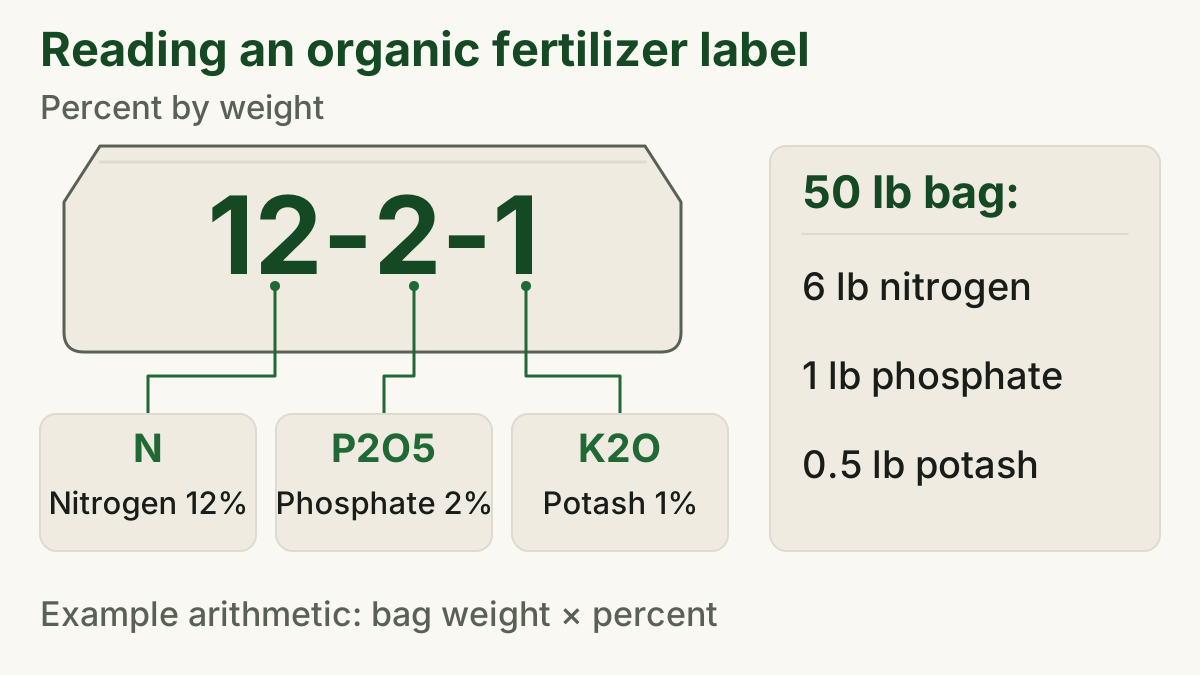
Figure 1. How to turn a label analysis into pounds of nutrient. The 12-2-1 bag is an example.
Two details trip people up. First, the second and third numbers are phosphate and potash, not pure phosphorus and potassium, so check which unit your soil test report uses before comparing it with a bag. Second, Utah State points out that organic materials often contain sulfur, iron, zinc and other nutrients that are not listed because the amounts are too low or too variable to guarantee.
Low numbers are normal for organic products. Utah State notes that organic fertilizers are applied at much higher rates than synthetic ones for the same amount of nutrient, and that spreaders need calibrating for them.
Takeaway: Read the three numbers as pounds of nutrient per 100 lb of product, then compare them with your soil test.
Which organic fertilizers supply which nutrient, and how fast?
Organic fertilizers sort into three groups by the nutrient they mainly supply: nitrogen, phosphate or potash. Both nutrient content and release speed differ from material to material. Clemson’s table, taken from the 2023 Vegetable Crop Handbook for the Southern United States, gives these averages; Utah State’s 2011 table is broadly similar but not identical.
| Material | N-P-K (Clemson, 2023) | Release time (Clemson) | Utah State note |
|---|---|---|---|
| Blood meal | 12–14 / 2 / 1 | 1–4 months | Rapid; acidic |
| Feather meal | 7–12 / 0 / 0 | 4+ months | Moderate |
| Fish meal | 10 / 6 / 2 | 1–4 months | Rapid; acidic |
| Fish powder | 12 / 0.3 / 1 | Immediate to 1 month | — |
| Fish emulsion (liquid) | 5 / 2 / 2 | 1–4 months | — |
| Corn gluten meal | 9 / 0 / 0 | 1–4 months | — |
| Cottonseed meal | 6 / 0.4–3 / 1.5 | 1–4 months | Slow; acidic |
| Alfalfa meal or pellets | 2 / 1 / 2 | 1–4 months | Slow to moderate (as hay) |
| Bone meal, steamed | 1–2 / 11–15 / 0 | 1–4 months | Moderate; alkaline |
| Bat guano, high P | 3 / 10 / 1 | 4+ months | — |
| Soft rock phosphate | 0 / 14–16 / 0 | Very slow (years) | — |
| Kelp powder | 1 / 0 / 4 | Immediate to 1 month | Moderate; adds zinc and iron |
| Greensand | 0 / 0 / 3 | Very slow | — |
| Worm castings | 2 / 1.5 / 1.5 | 1–4 months | — |
| Compost | — | — | 1–3 / 1–2 / 1–2; moderate; alkaline |
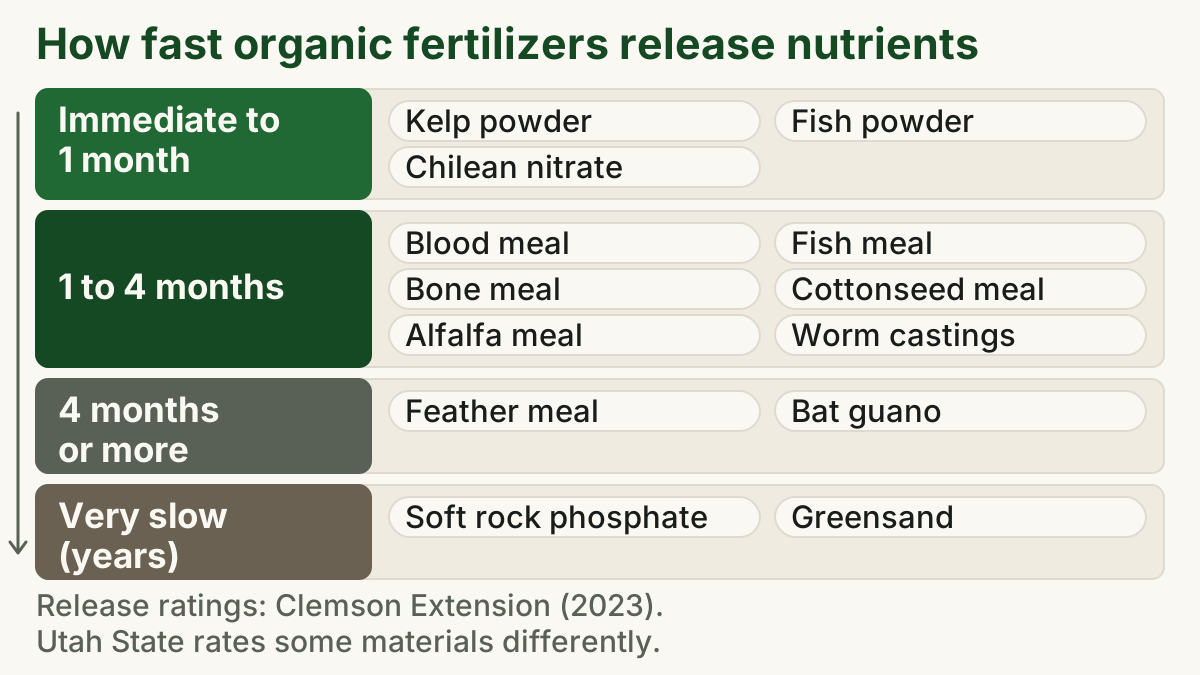
Figure 2. Organic fertilizers grouped by Clemson’s release-time ratings. Utah State rates some materials differently.
The sources do not always agree. Clemson rates feather meal at four months or more, Utah State at moderate. Bone meal phosphate runs from 11% to 30% across the two tables. The table is a guide to which materials to look at; the bag in your hand is the figure to calculate with. Liquids steeped from compost are a separate case with no standard analysis; see how compost tea differs from compost.
Clemson also notes that “organic” does not mean “from animals or plants” only: mined Chilean (sodium) nitrate is an approved organic fertilizer, and it is available to plants immediately.
Common mistake: Relying on a slow material to correct a short-term nitrogen shortage. Clemson rates feather meal at four months or more and Utah State at moderate, because soil microbes have to break its proteins down first; temperature, moisture and the product itself change the speed.
Takeaway: Pick the nutrient first and the release speed second; the brand name tells you neither.
Step 1 — Test the soil before buying anything
A soil test tells you which nutrients are short, which are already high and what the pH is, so you buy only what the garden needs. Texas A&M AgriLife recommends testing about every two years; Clemson suggests sampling at least three months before planting so that any lime has time to act.
Fertilizer only helps when a lack of nutrients is the problem. AgriLife’s garden guide points out that plants in poorly drained soil, heavy shade or competition with tree roots will not respond to it. Utah State adds that if a nutrient is already high, adding more of it can unbalance the soil and reduce growth, which matters with manure and bone meal, both of which add phosphate.
Takeaway: Send a sample before the season, so you avoid paying for nutrients the soil does not need.
Step 2 — Pick the nutrient that is actually short
Most home gardens need nitrogen more than anything else, Utah State says, but your report decides. Where it calls for nitrogen only, use a high-nitrogen material; where it calls for nitrogen and phosphate, use a material carrying both or combine two.
| Soil test calls for | Materials that supply it (from the tables above) | Watch for |
|---|---|---|
| Nitrogen | Blood meal, fish meal, fish powder, feather meal, corn gluten meal | Too much nitrogen gives tall, unproductive plants (AgriLife) |
| Phosphate | Bone meal, high-P bat guano; soft rock phosphate only for the long term | Bone meal is alkaline (Utah State) |
| Potash | Kelp, seaweed extract, wood ashes; greensand only for the long term | Use only where the soil test calls for potash |
| Organic matter, little of each nutrient | Compost, aged manure, worm castings, weathered spent mushroom substrate | Utah State lists weed seed in cattle, horse and sheep manure; Penn State advises weathering spent mushroom substrate because fresh material can be salty |
Clemson’s example shows why mixing is common: feather meal supplies nitrogen with almost no phosphate or potash, while bone meal is low in nitrogen and high in phosphate. Clemson also suggests comparing products by cost per pound of nutrient rather than per bag: in its example, a bag of blood meal can cost several times more than a bag of worm castings and still supply the same nitrogen for the money.
Spent mushroom substrate mainly improves soil structure and supplies few nutrients, Penn State says; our mushroom substrate guide explains where it comes from and how long to weather it.
Takeaway: Write down the one or two nutrients your report asks for, and shop only for those.
Step 3 — Match release speed to the crop
Fast-growing crops with high nutrient demand need quick-release materials; slow-growing plants can use moderate ones. Utah State gives corn and potatoes as examples of heavy feeders that need rapidly available materials, and warns that very slow materials make poor nutrient sources for most plants even though they add organic matter.
Utah State’s 2011 nitrogen recommendations per 1,000 square feet per year show how far needs differ:
| Plant group | Examples (Utah State) | Nitrogen, lb per 1,000 sq ft per year |
|---|---|---|
| Low-need vegetables | Peas, beans | 1–2 |
| Intermediate vegetables | Tomato, pepper, squash, lettuce, carrot, broccoli | 2–3 |
| High-need vegetables | Onion, sweet corn, potato | 4–6, split before and after planting |
| Turf, intermediate maintenance | Standard home lawn | 2–3, in two or more applications |
These figures come from Utah conditions; use your own soil test report where it gives a number.
Our reading of the timing: the AgriLife side-dressing advice below is written for ammonium sulfate, a fast synthetic source. With an organic material rated at one to four months, apply earlier than the guide’s date, or for in-season nitrogen choose one of the faster-rated sources: fish powder (immediate to one month in Clemson’s table), or blood meal and fish meal (rated rapid by Utah State, one to four months by Clemson). Kelp is fast-rated but supplies potash rather than nitrogen, so use it only where the soil test calls for potash. Compost tea is sometimes suggested as a liquid feed, but its nutrient content is not standardized.
Takeaway: For a crop that needs nitrogen in the next few weeks, pick from the fast group or apply well ahead.
Step 4 — Work out the amount from the label
Convert the label percentage to a decimal (12% becomes 0.12), divide the nutrient rate by that decimal, then scale to your area. Utah State’s formula is: pounds of product = (nutrient recommendation in lb per 1,000 sq ft ÷ nutrient fraction in the product) × (area in sq ft ÷ 1,000).
Example, assumed inputs: a soil test asks for 1 lb of nitrogen per 1,000 sq ft on a 1,000 sq ft bed.
| Product (analysis) | Nitrogen fraction | Product needed |
|---|---|---|
| Blood meal (12-2-1) | 0.12 | 1 ÷ 0.12 = about 8.3 lb |
| Fish emulsion (5-2-2) | 0.05 | 1 ÷ 0.05 = 20 lb |
| Worm castings (2-1.5-1.5) | 0.02 | 1 ÷ 0.02 = 50 lb |
Utah State’s own example uses blood meal to supply 2 lb of nitrogen per 1,000 sq ft on a 1,400 sq ft garden and arrives at 23 lb of product.
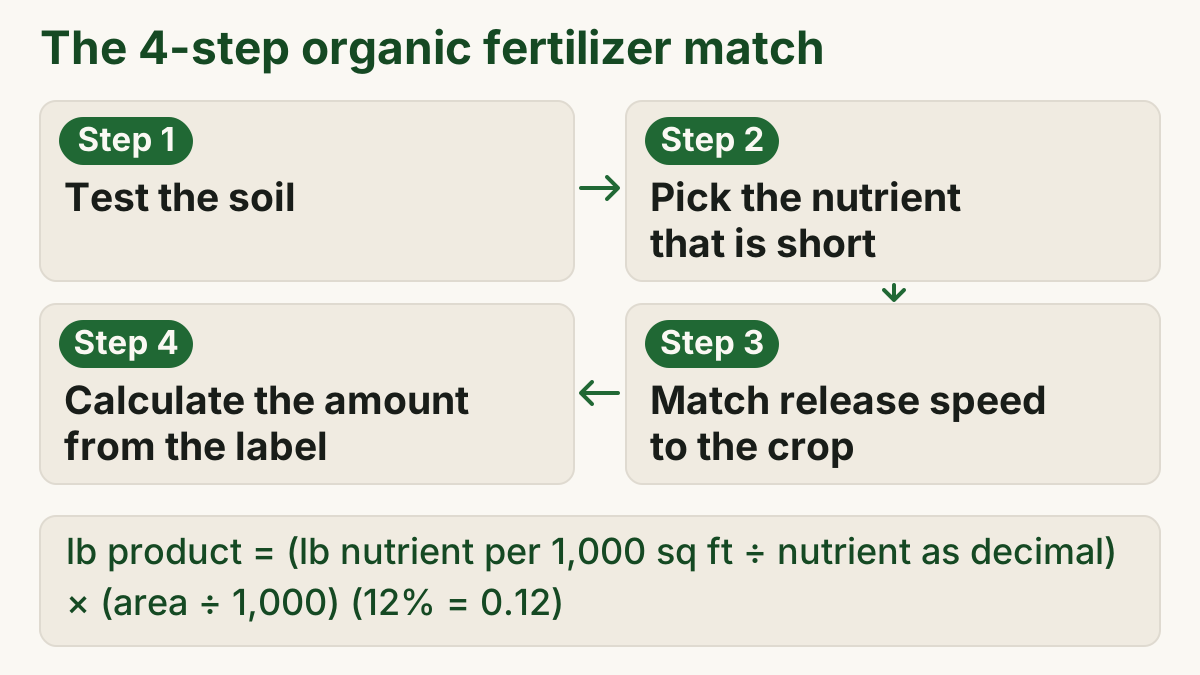
Figure 3. The four steps in order. Each step feeds a number into the next.
More is not safer. Utah State warns that many organic materials are high in salts and will burn plants if over-applied, and that improper use can also pollute surface and ground water.
Common mistake: Assuming organic fertilizer cannot burn plants. Utah State calls the belief that organic products are safer for plants and the environment a common misconception.
Record the four steps for each bed or lawn area so next season starts from numbers:
| Step | What to record | Your entry |
|---|---|---|
| 1 Test | Nutrients the report says are short, with the recommended lb per 1,000 sq ft | |
| 2 Pick | The nutrient you will supply and the material chosen | |
| 3 Match | The crop, when it needs the nutrient, and the material’s release rating | |
| 4 Calculate | Label percentage, area in sq ft, pounds of product applied and date |
Takeaway: Calculate from the nitrogen percentage on the bag and stop at the rate your soil test gives.
Which organic fertilizer fits each garden use?
For vegetable beds, build organic matter with aged manure or compost and add a meal only for the nutrient the soil test shows short; for tomatoes, peppers and squash, time extra nitrogen for first fruit set; for Texas bermudagrass lawns, split nitrogen into small applications; for fruit trees, wait for new growth and supply nitrogen. Texas A&M AgriLife’s guidance gives the timing and limits below; the material column is our selection from the nutrient tables above.
| Garden use | What the guidance says | Organic materials that fit | Source |
|---|---|---|---|
| Vegetable garden at planting | Spread 20–30 lb of manure per 100 sq ft and work it in; never fresh manure (certified organic farms also follow USDA’s raw manure timing rule) | Aged manure or compost as a base, plus a meal for any nutrient the test shows short | AgriLife, Fertilizing a Garden |
| Vegetable garden, sandy soil | Sandy soils cannot take heavy doses; feed more often in lighter doses | Smaller, repeated applications of a moderate or fast material | AgriLife, Texas Vegetable Gardening |
| Tomatoes, peppers, squash | Side-dress nitrogen at first fruit set; too much nitrogen gives tall, unproductive plants | Our selection: a fast-rated nitrogen source; a slow one needs applying earlier, by an amount these guides do not set | Timing: AgriLife, Texas Vegetable Gardening (written for ammonium sulfate) |
| Lawn (bermudagrass) | No more than 0.5–1 lb N per 1,000 sq ft per application; 1–4 applications a year; only on green, actively growing grass | Organic products count as slow-release nitrogen; AgriLife suggests combining quick and slow sources | AgriLife, Bermudagrass calendar |
| Fruit trees | Fertilize only after new leaf and shoot growth; nitrogen is usually the only element needed in most Texas soils | A nitrogen source scattered at least a foot from the trunk and watered in | Fort Bend County Master Gardeners |
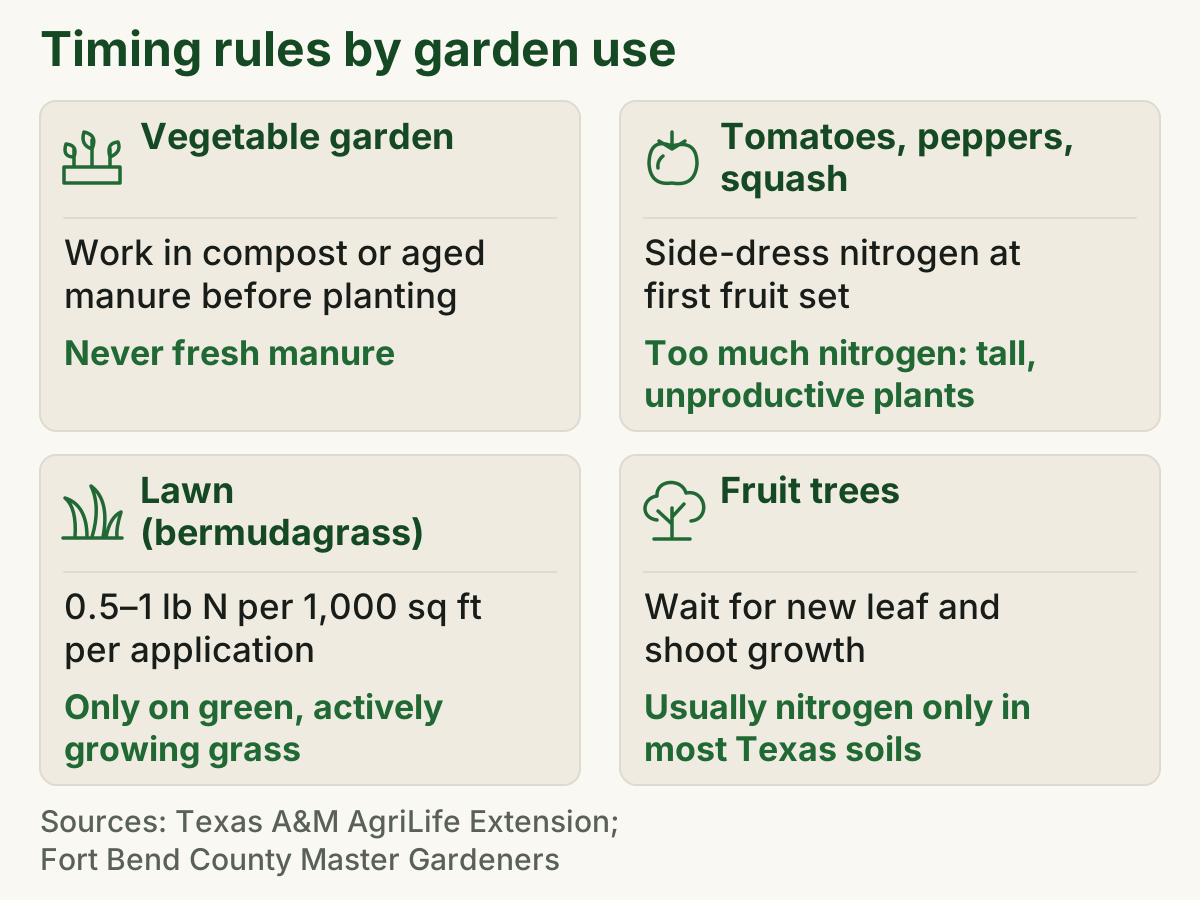
Figure 4. Timing rules by garden use, from Texas A&M AgriLife and Fort Bend County Master Gardener guidance.
Two AgriLife cautions apply across all uses. Do not put lawn fertilizer on vegetable beds: it carries too much nitrogen, and many lawn products contain weed-control chemicals that can injure or kill vegetables. And on tomatoes, peppers and watermelon, AgriLife’s advice for blossom-end rot is even soil moisture and avoiding excessive nitrogen.
Lawns have one advantage: AgriLife notes that established lawns build up organic nitrogen as clippings and roots break down, so older lawns may need less feeding. If you also use liquid feeds, our explainer on what compost tea is and how it differs from compost covers that separately.
Takeaway: Match the timing rule for your use first; the material choice follows from the soil test.
When this does not apply
This guide covers in-ground vegetable gardens, home lawns and fruit trees in the US. It does not apply to:
- Containers and houseplants, where potting mixes and small volumes change both the rates and the burn risk.
- Commercial or certified organic production, where materials must meet program rules not covered here.
- Regions with different soils and grasses: the lawn limits are for Texas bermudagrass and the crop nitrogen figures are from Utah; check with your local extension service.
- Food safety questions about manure on edible crops, which belong with your local extension office or food safety authority; our compost tea explainer lists what USDA and extension sources say about pathogen risks without settling them.
Takeaway: Outside these uses, start from your local extension service’s recommendations.
Method and sources
Compiled on 7 October 2026 from Clemson Extension’s HGIC 1659 (2023), Utah State University Extension’s peer-reviewed fact sheet (2011), three Texas A&M AgriLife Extension guides and a Fort Bend County Master Gardener fruit guide. Nutrient figures are published averages and ranges, not tests of any product. We do not sell or recommend fertilizer brands; Known Source Farms is an independent information site. More growing guides are in our home growing section.
Related reading:
- What is compost tea? — How liquid compost extracts differ from compost and fertilizer, and what the evidence says.
- Mushroom substrate guide — Choosing growing material for home mushroom cultivation, another use for straw and wood by-products.
Takeaway: Use the published tables to shortlist materials and the label to calculate.