Spraying compost tea on a nutrient problem it cannot fix can delay the real correction, and brewing it with the wrong additives can let bacteria already in the compost multiply. Compost tea is a liquid made by steeping finished compost in water, with or without aeration, and applied to soil or leaves; research on its benefits is mixed, it has no standard nutrient analysis, and USDA researchers found that common additives let pathogens multiply.
Compost tea is not compost, and it is not the dark leachate that drains from a compost pile. University of Vermont Extension describes the evidence for disease suppression as “it depends” (2005), and a Washington State University review from about 2003 found only two controlled studies of aerated tea for disease control, neither showing it. USDA’s Agricultural Research Service reported in 2006 that Salmonella and E. coli present at very low levels in compost multiplied in tea brewed with additives such as kelp, fish hydrolysates or humic acid, but stayed undetectable in tea brewed without them. This page explains the terms, the evidence and the risks; it does not give recipes.
This page is compiled from extension and USDA publications by Known Source Farms, an independent information site; we have not tested compost tea ourselves.
- Compost tea, compost extract, worm tea and leachate are different liquids, and the names are not used consistently.
- Disease suppression results vary between batches, crops and studies.
- Nutrient content is not standardized; for a known dose, start from a soil test and a fertilizer chosen for the nutrient you lack.
- Official guidance on safer brewing centres on clean water, clean equipment, properly heated compost and avoiding additives.
What is compost tea?
Compost tea is the liquid you get by steeping mature compost in unheated water and straining it, according to USDA ARS; growers apply it as a foliar spray or a soil drench. University of Vermont Extension adds that it can be brewed with air pumped through it (aerated) or left to ferment undisturbed (non-aerated).
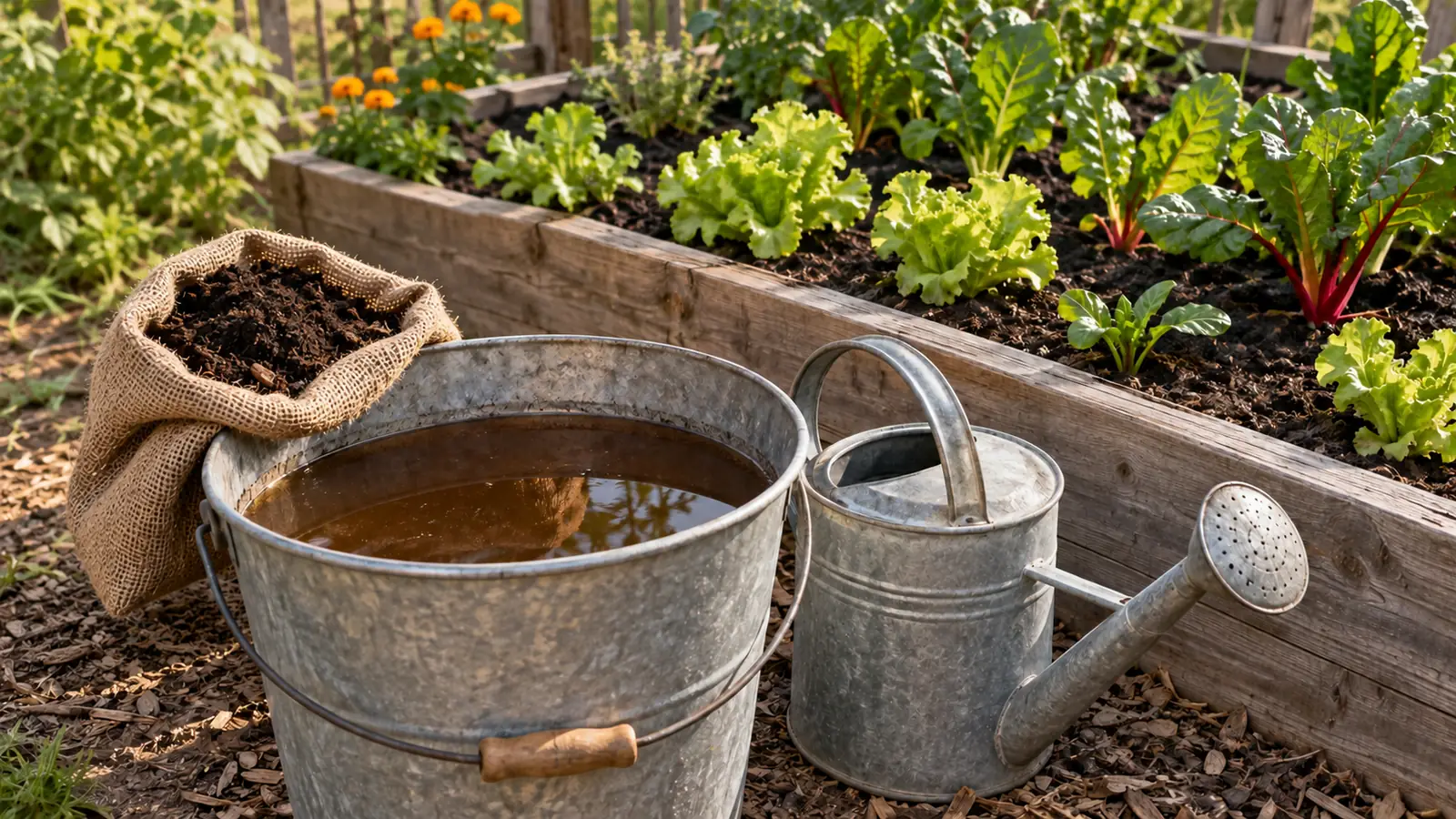
The term covers more than one product. UVM notes that some people call the liquid from compost suspended in water for a short time, often in a burlap sack, compost tea; others call that an extract and reserve “tea” for liquid that has been brewed, usually with a microbial food source such as molasses, kelp, fish by-products or humic acids. When you read a claim about compost tea, check which of these it means.
Both methods need a vessel, good-quality compost, water, time and straining before the liquid goes through a sprayer (UVM). Aeration shortens brewing but adds equipment cost, and UVM found it was not clear that aeration is necessary.
Takeaway: Ask what a “compost tea” was made from and how, before comparing claims about it.
How does compost tea differ from compost, worm tea and leachate?
Compost is a solid soil amendment; compost tea and worm tea are liquids brewed from finished compost or worm castings; leachate is runoff from a compost pile that UVM Extension (2005) advises against spraying on food crops. Fish emulsion and similar liquid fertilizers differ again because they carry a stated nutrient analysis.
| Material | What it is | Nutrients | Main use | Main caution | Source |
|---|---|---|---|---|---|
| Compost | Decomposed plant and animal material | About 1–3% N, 1–2% phosphate, 1–2% potash; moderate release (Utah State, 2011) | Soil amendment and mulch | On certified organic farms, compost with manure must meet processing requirements or be managed under raw-manure limits | Utah State (2011); USDA NOP 5021 |
| Compost tea (aerated or not) | Finished compost steeped in water, strained | Not standardized; varies by batch | Soil drench or foliar spray | Additives can let pathogens multiply | UVM; USDA ARS |
| Worm tea | Liquid steeped from vermicompost (worm castings), as the term is used here | Not analyzed in these sources; the solid castings average about 2-1.5-1.5 (Clemson, 2023) | Not separately assessed in these sources | Not separately assessed in these sources | USDA NOP 5021 (vermicompost definition); Clemson |
| Leachate | Dark liquid draining from the bottom of a compost pile | May contain soluble nutrients | Not suitable for spraying on food crops (UVM, 2005) | May contain organisms that cause illness | UVM |
| Fish emulsion (for comparison) | Processed fish liquid fertilizer | About 5-2-2 in Clemson’s table (2023); products vary | Liquid feed | Follow the label rate | Clemson |
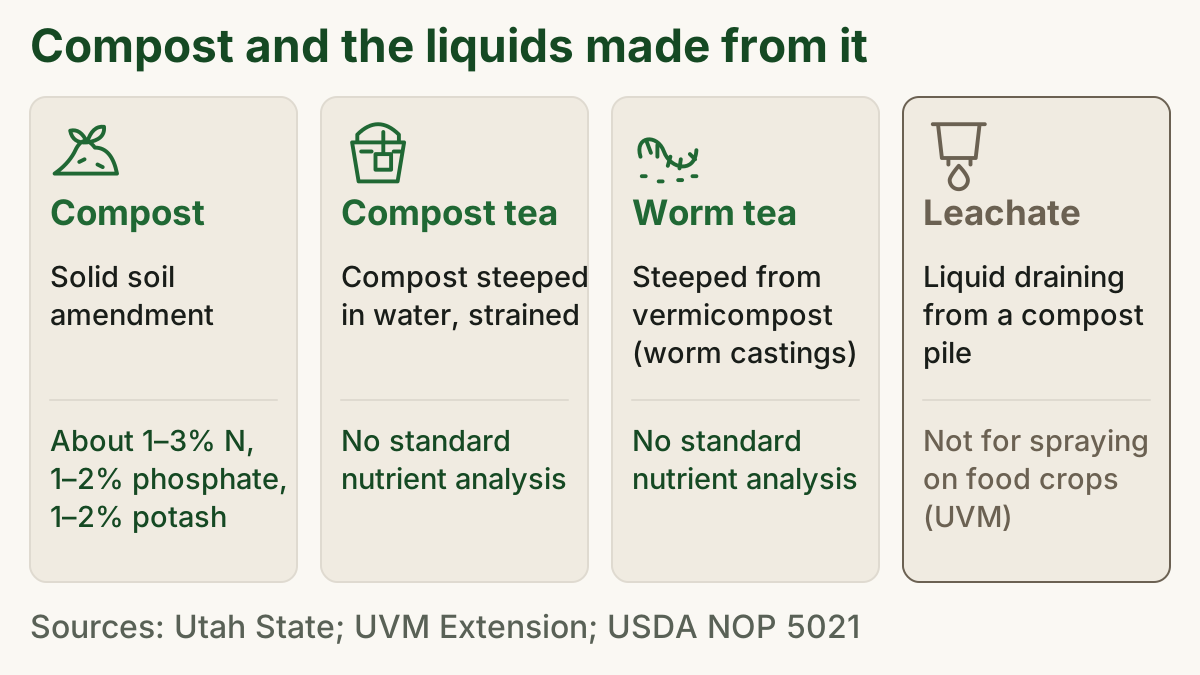
Figure 1. Compost and the three liquids most often confused with each other, compiled from UVM Extension, USDA and Clemson.
USDA’s National Organic Program describes vermicompost as mainly finely divided earthworm castings, made without high heat by earthworms and microbes, with nitrogen mostly in nitrate form and phosphorus and potassium in soluble forms. The nutrient figures for compost and castings above are averages from Utah State and Clemson’s organic fertilizer tables; how much of those nutrients ends up in a tea is not published in these sources.
Common mistake: Collecting the liquid that drains from a compost bin and calling it compost tea. UVM Extension treats that as leachate, which may carry organisms that cause illness and is not suitable for spraying on food crops.
Spent mushroom substrate is another compost-like material that is not a tea: it is the growing medium left after a mushroom crop, used as a soil amendment. Our substrate guide explains what happens to it after harvest.
Takeaway: If you want a known nutrient dose, choose a material with a label; a home-brewed tea has no nutrient analysis to calculate from.
What does compost tea do for plants?
The evidence is mixed. UVM Extension summarized it in 2005 as “it depends”: some studies show disease suppression and others do not, partly because no two batches of compost are alike. Composted mulch has the stronger record, according to a WSU review.
| Claim | What the sources found | Source and date |
|---|---|---|
| Compost suppresses soil-borne disease | Documented in many studies when compost is used as mulch or amendment | Chalker-Scott, WSU (about 2003) |
| Non-aerated tea suppresses disease | May be useful against some pathogens on some plants; many results not repeated | Chalker-Scott, WSU (about 2003) |
| Aerated tea suppresses disease | Only two controlled studies found, neither showing control; one found aeration reduced efficacy | Chalker-Scott, WSU (about 2003) |
| Tea suppresses disease in field crops | Two-year Rodale Institute and Penn State study: about 50% powdery mildew suppression on grapes in year one, no late blight suppression on potatoes in year two | As summarized by UVM Extension (2005) |
| Tea stimulates growth | The same study found more measurable benefits in growth, yield and quality than in disease control | As summarized by UVM Extension (2005) |
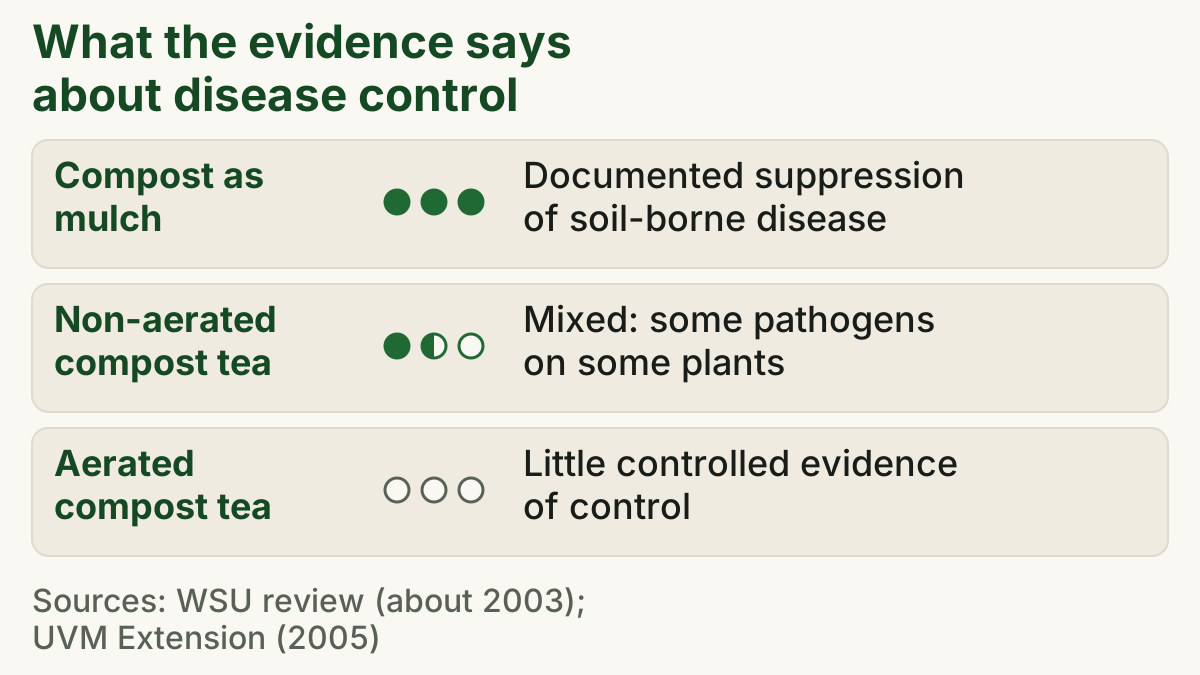
Figure 2. What the reviewed sources found, by claim. The research cited is from 2005 or earlier.
UVM lists factors that research suggests may help: compost made from horse, cattle or poultry manure, compost no more than 9 to 12 months old, at least 5 to 8 days of brewing for non-aerated tea or 24 to 48 hours for aerated tea, and applying the tea promptly because it turns anaerobic as the oxygen runs out. The Rodale and Penn State researchers concluded, in UVM’s words, that efficacy and consistency need to improve before recommendations can be made to growers.
Chalker-Scott adds a broader point: poor plant health caused by compacted soil, wrong plant choice or overuse of fertilizer will not be solved by compost tea. If a plant shows a nutrient problem, a soil test and a fertilizer matched to the shortage address it more directly.
Takeaway: Treat disease control from compost tea as unproven for your crop; compost as mulch has the stronger evidence.
Is compost tea a fertilizer?
It can supply some nutrients, but a home-brewed tea without a nutrient analysis cannot be used to calculate a dose. Utah State Extension lists manure or compost tea as a way to apply liquid fertilizer, and UVM notes the extract can be applied as a soil or foliar fertilizer, but neither gives a nutrient analysis, because it varies with the compost and the method.
That makes compost tea hard to dose. Organic fertilizer recommendations are given in pounds of nutrient per 1,000 square feet, and you need the percentage on a label to work out the amount from the label. Compost tea has no such percentage. Chalker-Scott also warns that overuse and runoff of teas used as fertilizer could add nitrogen and phosphorus to waterways; “natural”, she writes, does not mean safe.
Our reading: use compost tea, if at all, as a supplement to a fertility plan built on a soil test every couple of years, not as the plan itself. How much nitrogen a bed or lawn needs, and how much to apply at once, depends on the use; our guide sets out fertilizer timing and limits by garden use.
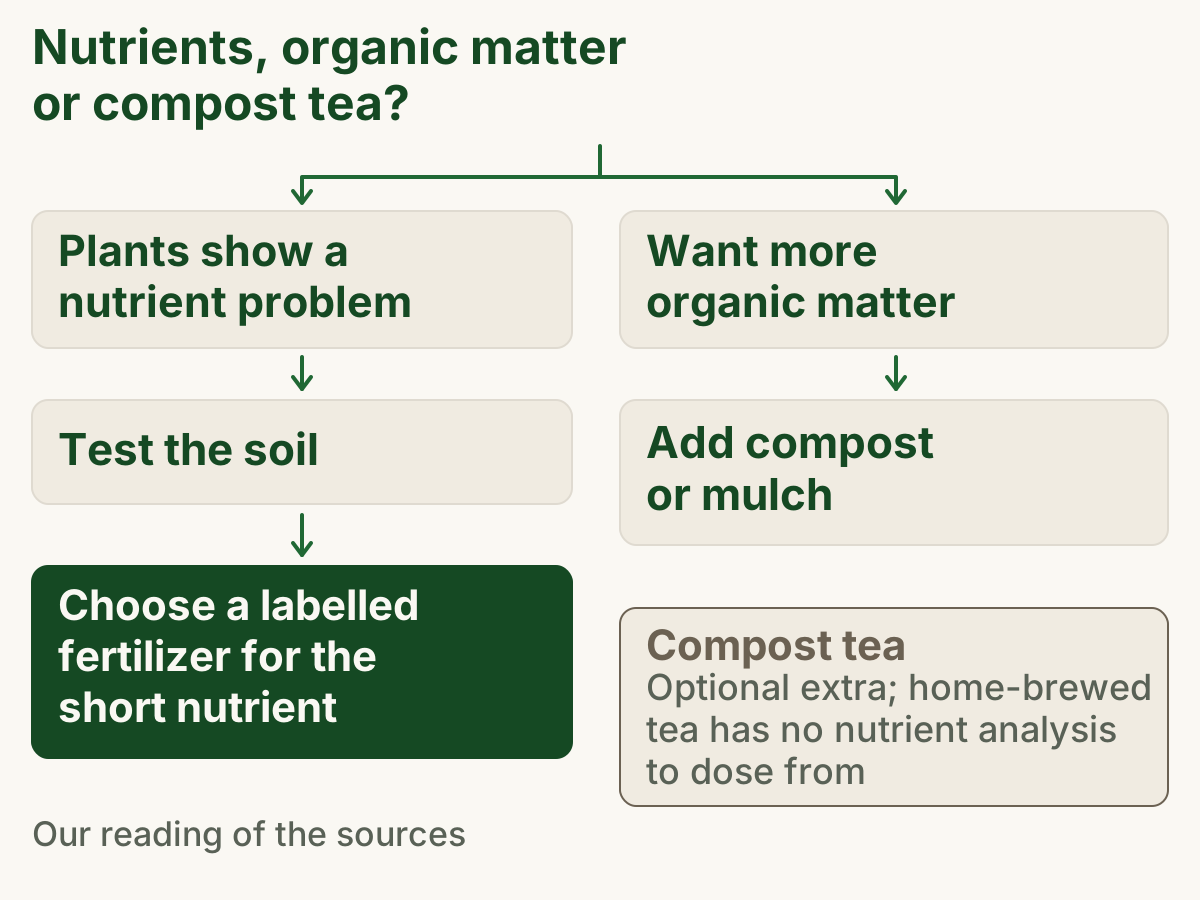
Figure 3. Where compost tea fits next to soil testing, fertilizer and compost. Our reading of the sources.
Takeaway: For a nutrient shortage, test and use a labelled fertilizer; untested home-brewed tea gives no figure to calculate from.
What are the risks of compost tea?
The main risk the sources flag is the growth of illness-causing bacteria when tea is brewed with nutrient additives. USDA ARS researchers found that Salmonella and E. coli present in compost at very low levels (fewer than two cells per millilitre of tea) multiplied when additives such as soluble kelp, fish hydrolysates, humic acid, rock dust or proprietary nutrient solutions were used, and stayed undetectable in teas made without additives.
The ARS researchers also reported that this result counters the belief that aerobic conditions will keep human pathogens in check when additives are present, and said testing of the finished tea may be necessary.
| Risk | What the sources say | Source |
|---|---|---|
| Pathogen growth with additives | Additives can let even a few pathogenic bacteria multiply; testing the tea may be necessary | USDA ARS, 2006 |
| Leachate used as tea | May contain organisms that cause illness; not suitable for spraying on food crops | UVM Extension, 2005 |
| Manure-based inputs on organic farms | Raw manure must be composted, or incorporated into the soil at least 120 days before harvest of crops whose edible part touches soil and at least 90 days for others; certifiers decide how this applies to teas | 7 CFR 205.203 |
| Nutrient runoff | Overuse and runoff could contribute to water pollution | Chalker-Scott, WSU |
The official history matters here. A National Organic Standards Board compost tea task force reported in 2004, and the board made a final recommendation on compost and compost tea in November 2006 (USDA NOP 5021). In June 2005, between those dates, UVM Extension summarized the recommendations as they then stood: use only potable water; sanitize all equipment; make tea only from compost that reached at least 131°F for three days and was mixed so the whole pile heated; avoid additives, especially simple sugars like molasses; additives may be used if sample batches are tested and meet EPA recreational water quality guidelines for coliform bacteria; and if tea made with additives is not tested, or fails those guidelines, wait 90 to 120 days between application and harvest of food crops, as with raw manure on organic farms. UVM noted that, as of its writing, USDA’s National Organic Program had not officially adopted compost tea guidelines, and that organic farmers must check with their certifier. Treat these as dated recommendations, not current rules.
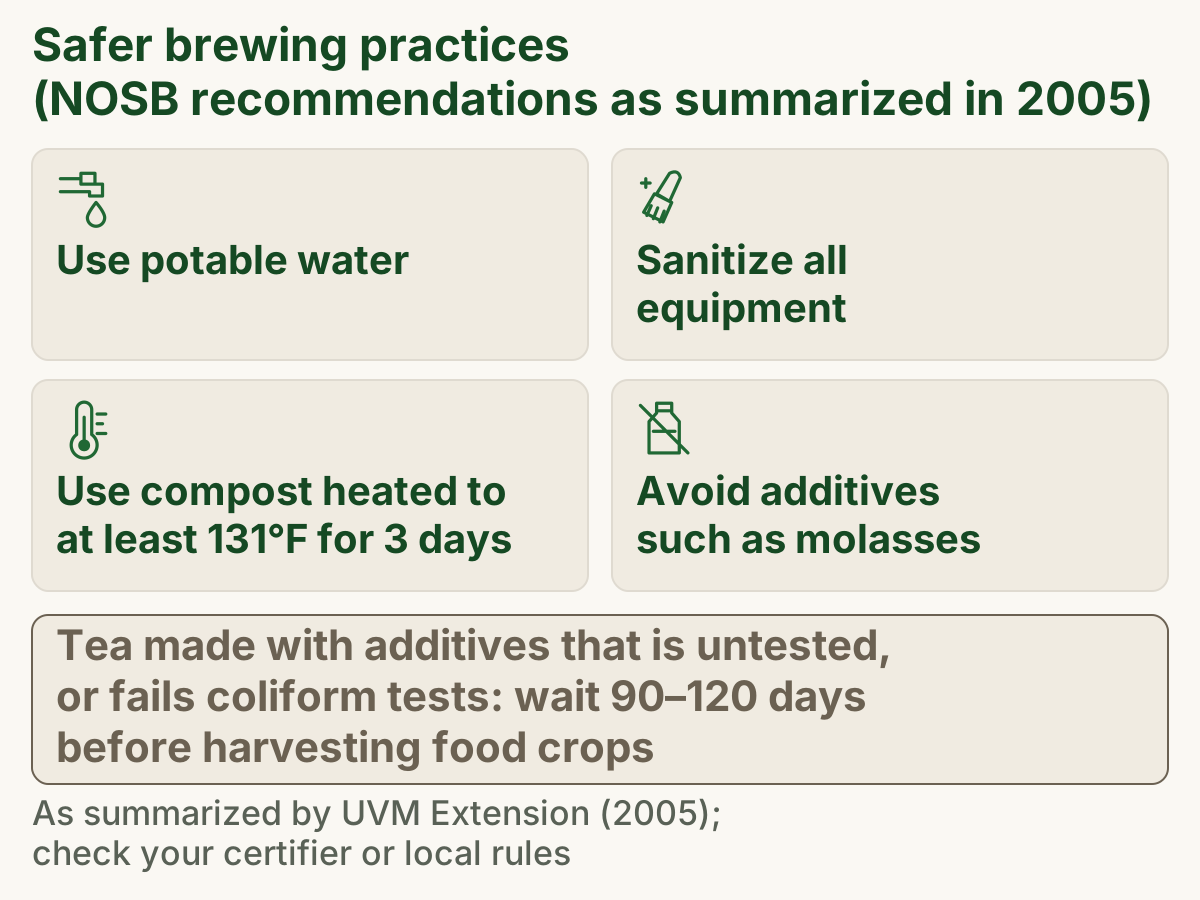
Figure 4. Practices from the National Organic Standards Board recommendations, as summarized by UVM Extension in 2005.
Common mistake: Adding molasses or another sugar to “feed the microbes”. USDA ARS found that additives let pathogens present in the compost multiply, and the NOSB recommendations summarized by UVM single out simple sugars like molasses as additives to avoid.
Takeaway: The practices above show what officials worried about; check current extension or certifier guidance before using compost tea on food crops.
When this does not apply
This page explains compost tea for home growers in the US. It does not cover:
- Recipes, dilution rates or application schedules, which the sources we used do not standardize.
- Certified organic production, where your certifier’s current requirements decide what is allowed.
- Food safety decisions for crops you sell or share, which belong with your state or local food safety authority.
- Commercial compost tea products, which should be used as their labels direct.
More guides on soil and fertility are in our home growing section.
Takeaway: Use this page to understand compost tea, and official guidance to decide how to use it.
Method and sources
Compiled on 7 October 2026 from University of Vermont Extension (2005), a Washington State University literature review by Linda Chalker-Scott (about 2003), USDA Agricultural Research Service (2006), USDA National Organic Program guidance NOP 5021, the current text of 7 CFR 205.203, and Utah State and Clemson Extension fertilizer tables. The research on compost tea effectiveness cited here is from 2005 or earlier; we will update this page when we review newer extension guidance. We have not brewed or tested compost tea.
Related reading:
- How to choose an organic fertilizer by crop — Read N-P-K labels and pick materials by the nutrient your soil test shows is short.
- Mushroom substrate guide — See what spent mushroom substrate is and how Penn State suggests using it in gardens.
Takeaway: The cited evidence is dated; check current extension guidance for your state.