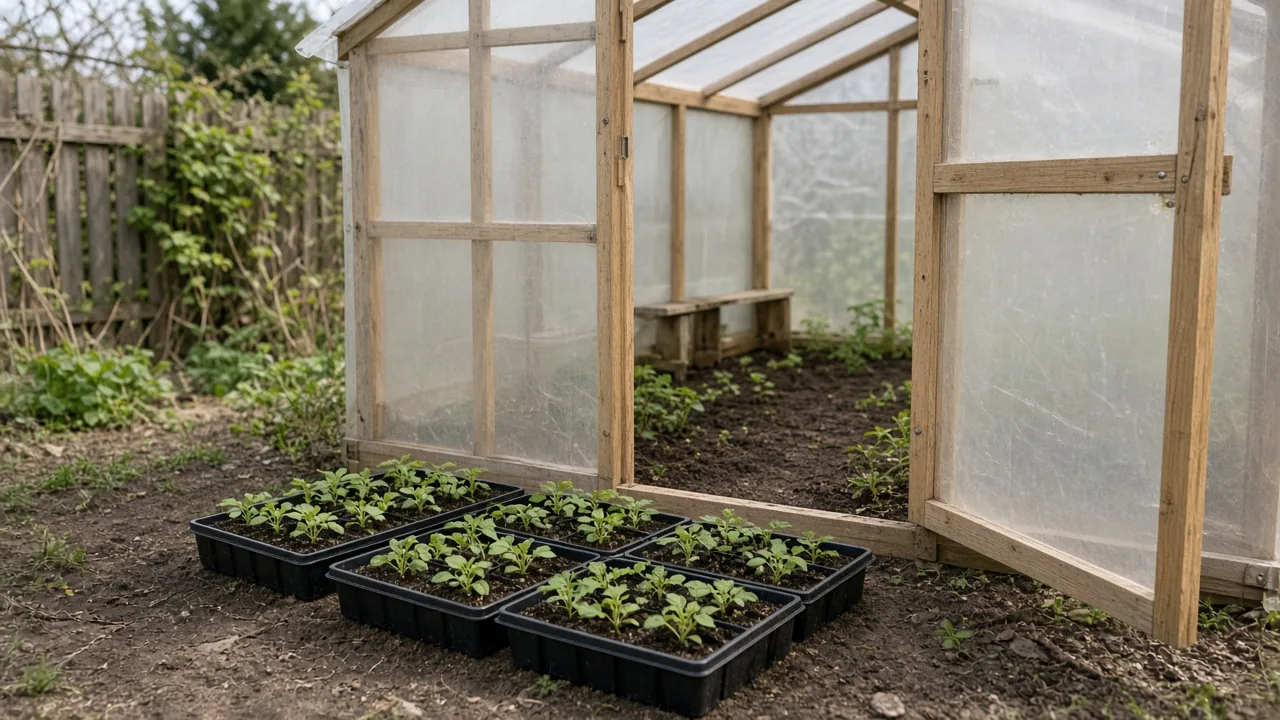
A yellow tomato seedling leaf is the wrong reason to add fertilizer before you know whether the mix is soaked, dry, or already charged. Record which leaves changed, how the mix feels, the light, the bag’s fertilizer line, and any recent pot-up or outdoor move, then use that row for the next step.
Yellow tomato seedlings need a tray record before any fertilizer. Write which leaves changed, whether the mix is wet or dry, what light the plants had, and whether the bag lists a starter fertilizer. Utah State University Extension’s 18 February 2025 fact sheet says soilless mixes generally lack the nutrients to sustain growth, while some mixes include a starter charge that lasts a few weeks at most, and the label is what tells you which case you have. The same sheet says a window is usually too little light, and that roots kept too wet run short of oxygen. University of Minnesota Extension’s seedling page, updated in 2026, ties slow growth and yellow leaves to nitrogen in some mixes and to excess salts in others. Texas A&M AgriLife’s 19 April 2021 note covers nutrition and disease on growing tomato plants.
Known Source Farms is an independent information site. It does not sell seed, mix, or fertilizer, and it is not the Texas farm that previously used this domain. Other home-growing notes are on the article list.
What do you write before you add fertilizer?
Copy the table. Leave every cell blank until you have looked at that tray. One row is one tomato crop on one date. The last cell is the next step you take from the table further down. If you did not count the days, measure the temperature, or read a week count on the bag, that cell stays blank.
| Days since emergence | Leaves that changed | Root-zone moisture | Light and measured night temperature | Mix label: starter fertilizer | Recent pot-up or outdoor time | Next step |
|---|---|---|---|---|---|---|
What do you write in each column?
Days since emergence is the count you made from the day the seedlings came up. A blank cell means you did not count. Do not estimate it from the size of the leaves.
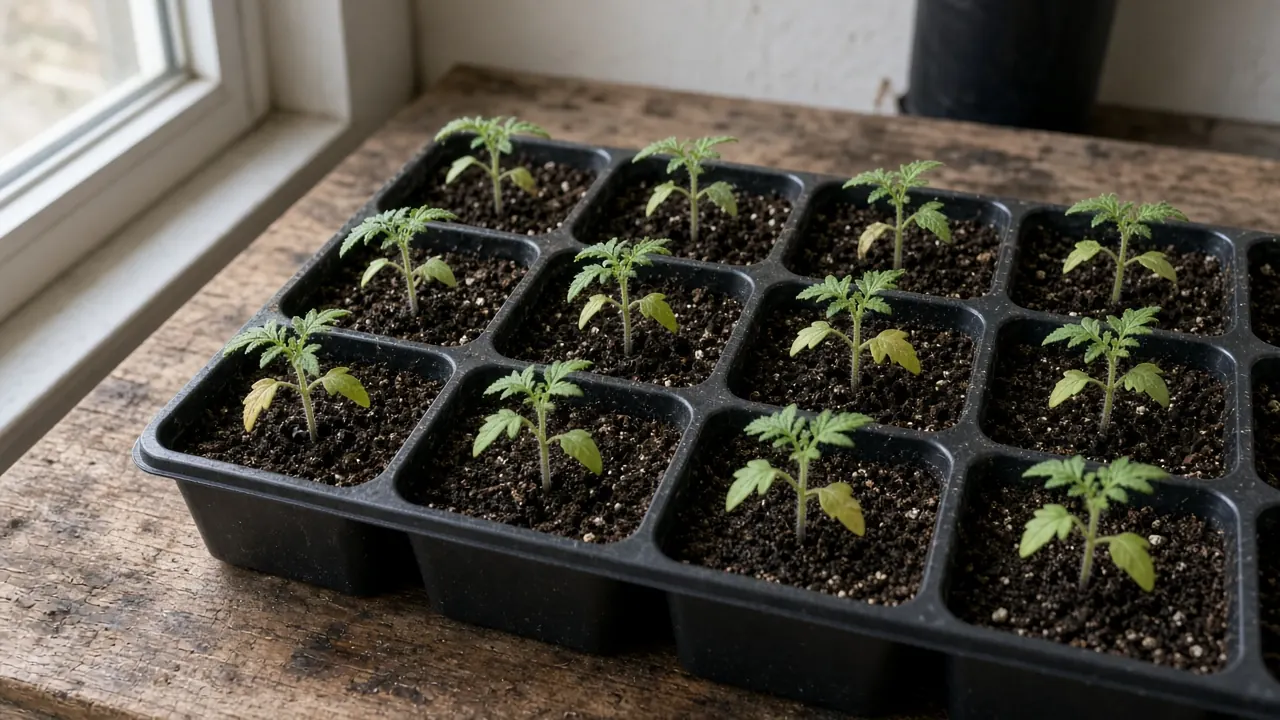
Leaves that changed is the position you see: older leaves, the youngest leaves, speckles or spots on older leaves, or most of the plant. Texas A&M AgriLife Today on 19 April 2021, quoting Joe Masabni, says a healthy tomato that is not stressed by disease or nutrition should be green from the bottom to the top. On that page, older leaves yellow when he is describing nitrogen shortage, because those leaves supply nitrogen to younger leaves. Iron deficiency is most prominent in the youngest leaves. Magnesium deficiency looks more like speckles or spots on the older leaves. Write the position. The position still waits on the moisture, light, and label cells.
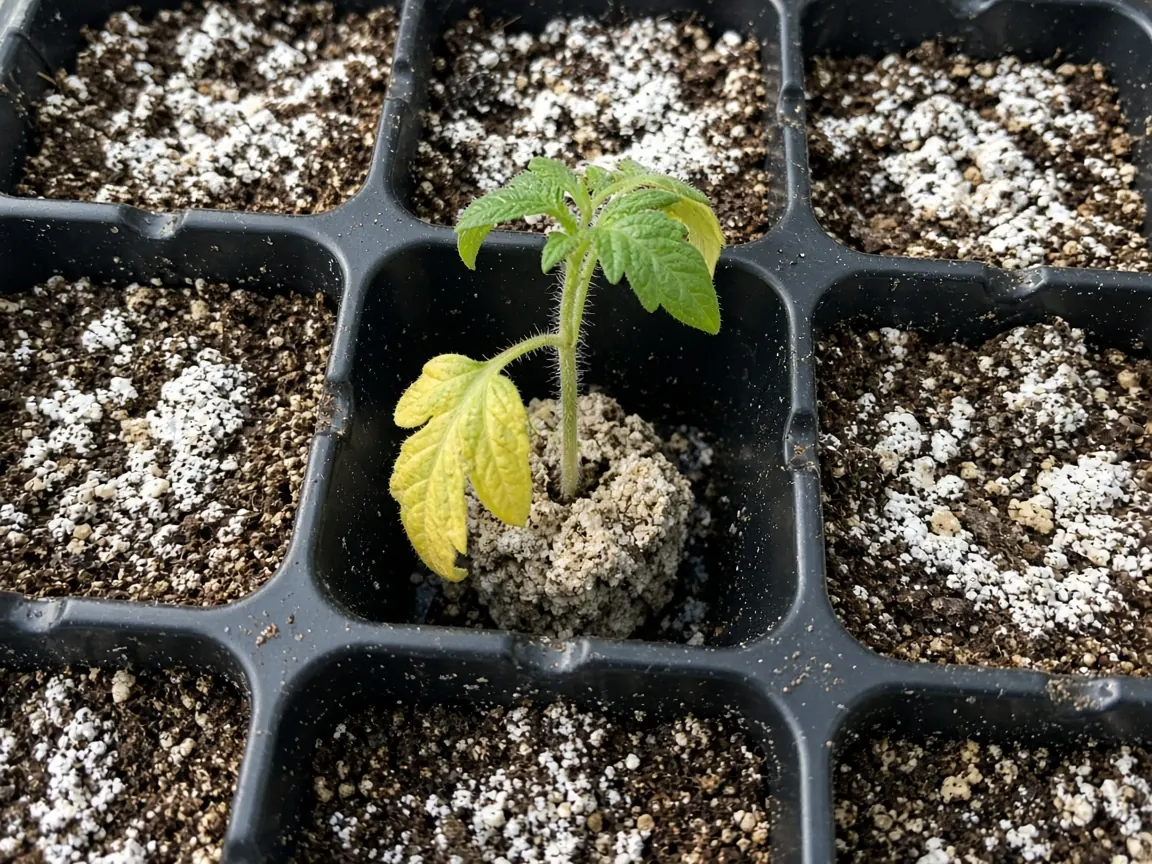
Figure 1. A tomato seedling with a yellow lower leaf and greener leaves above it. White particles sit on the mix in the surrounding cells.
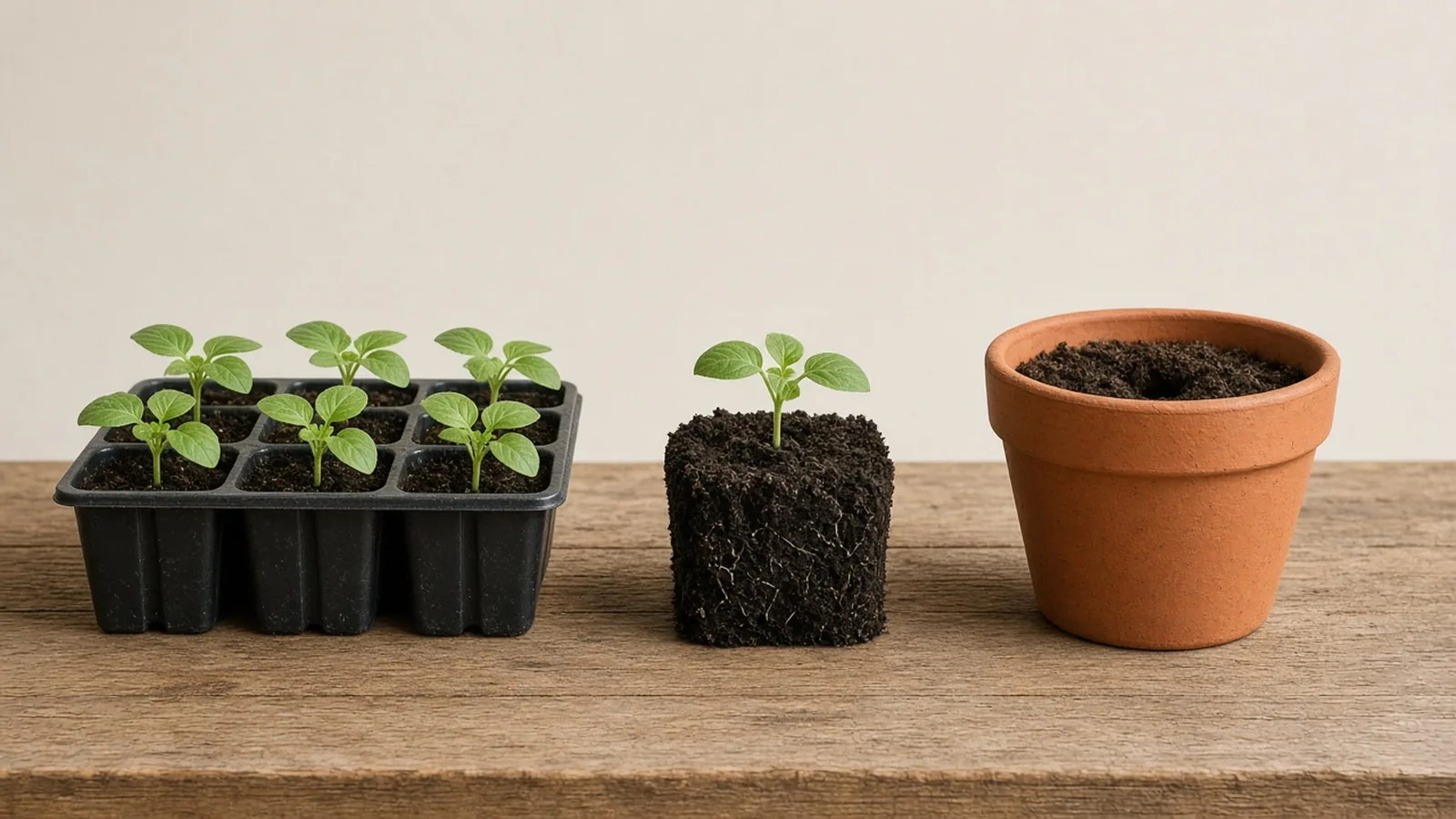
Root-zone moisture is the tray in your hand. Utah State says to notice the weight of a fully watered tray, and to water when it gets significantly lighter. The mix goes from dark brown to nearly black when watered to light brown when dry. Very dry mix shrinks and pulls away from the cell wall. A short time without enough water can kill young seedlings. Roots kept too wet run short of oxygen. University of Minnesota Extension says seedlings that tip over from the top can be showing epinasty from an oxygen-limited root zone after overwatering, and that this can look like wilt. The same page says many people water every day, and that small seedlings often need less than that. Write what you see: soaked, dark and heavy, light brown and light in the hand, or pulled away from the plastic. The page does not print a tomato-cell watering calendar.
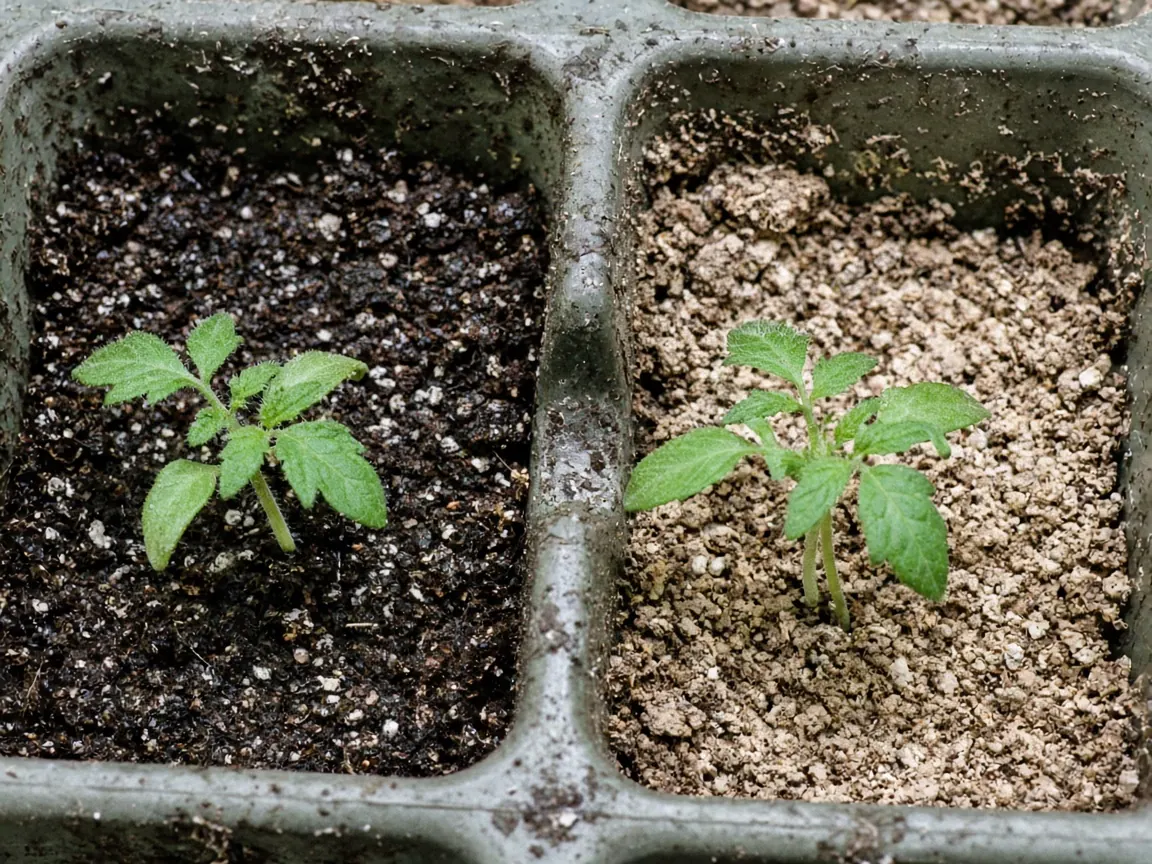
Figure 2. Two cells side by side: dark damp mix on the left and pale dry mix on the right, each with a small tomato seedling.
Light is the source and, if you measured them, the hours and the gap from the lamp to the leaves. Utah State’s light section says natural light through a window is usually insufficient, that an actively growing seedling benefits from 12–14+ hours of light a day, and that lights can hang 2–3 inches above the plants, with care for scorch if the lamp throws heat. The thin-stem section of the same 18 February 2025 sheet says supplemental light within several inches, up to 6–12 inches. Both lines are on that sheet. Write the gap you measured. University of Minnesota Extension says leggy seedlings are stretching for light. Night temperature, if you measured it, goes in the same cell, with the unit. Utah State says most vegetables prefer nights of 60°F to 65°F, with days about 10°F warmer, and that warmer rooms can produce spindly plants. That range is the protected growing range on the fact sheet. An unmeasured night stays blank.
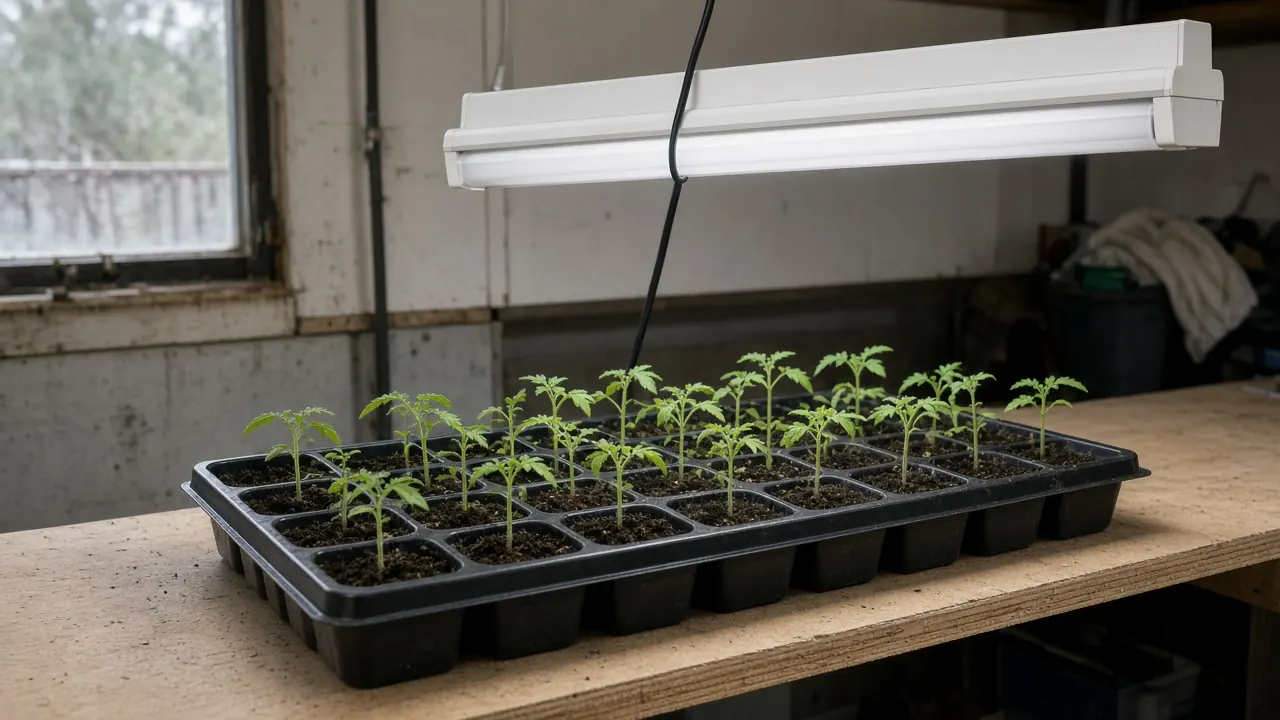
Figure 3. A cell tray of tomato seedlings on a bench under a white shop light.
The mix-label cell is a copy of the bag. Utah State says soilless mixes used for seedlings generally do not contain the nutrients to sustain growth, and that some mixes include a starter fertilizer that lasts a few weeks at most. Write “starter listed” only when the bag says so, and write the week count only when the bag prints one. A bag that is silent stays “not stated.” The product name does not fill that cell.
Recent pot-up or outdoor time is the date you moved them, or the outdoor hours you already gave them. Utah State says some leaves may yellow or turn dry and brown while seedlings harden off, and calls that normal, because the aim is new leaves in bright, dry outdoor air. If the yellowing showed up after time outdoors, the next step is the harden-off log.
Which recorded row sets the next step?
Read the row from the top of this table. Use the first line that matches what you wrote.
| What the row shows | Next step |
|---|---|
| Seedlings fall over at the soil line, or fungus is visible where the stem meets the mix | This is damping-off, as University of Minnesota Extension and Utah State describe it. Utah State says to remove the affected seedlings and the mix they are in. Fertilizer is not this row. |
| Small white winged insects, and the leaves are stippled yellow | Utah State says whiteflies can cause stippled yellowing, up to loss of the leaf, and to consider discarding heavily infested plants. Fertilizer is not this row. |
| Plants tip from the top, or the mix stays soaked | Stop adding water. University of Minnesota Extension ties that toppling to oxygen-limited roots after overwatering. Utah State says not to keep roots too wet. |
| The tray is much lighter, the mix is light brown or pulled from the cell wall, or a seedling is wilting and the mix is dry | Water. Utah State says a short time without enough water can kill young seedlings, and to watch the color return to dark. |
| Stems are tall and thin, and the light is only a window or the lamp sits far above the leaves | Add light and write the new gap. Utah State’s light section prints 12–14+ hours and a 2–3 inch hang. The thin-stem section prints a gap of several inches, up to 6–12 inches. University of Minnesota Extension ties legginess to low light. |
| Yellow or dry brown leaves showed up after outdoor time | Continue on the harden-off log. Utah State treats some yellow or dry brown leaves during hardening as normal. |
| A white crust sits on the mix | Utah State calls that crust salts and minerals from the water and from fertilizer. Water from above so the tray drains, and discard the drainage. Do not set the tray back in that water. This row does not add more fertilizer. |
| Leaves overlap the next plant, or the roots are a thick mat, and the plants keep wilting | Pot up. Utah State says those are the signs the seedling is ready for a larger container. The tray-to-pot page is that move. |
When does the bag allow fertilizer?
Use a fertilizer step only after the rows above are clear: the plants are not damping off, you do not see whiteflies, the mix is neither soaked nor dried out, the light is in place, the yellowing did not start outdoors, and you are not looking at a salt crust.
Then read the bag again. If it lists a starter fertilizer and your day count is still inside the weeks printed on that bag, keep the record and wait. If the bag prints no week count, the week cell stays blank. “A few weeks at most” is Utah State’s general description of starter charges. It is not a number to write when the bag is silent.
If the bag lists no starter charge, or the printed weeks have passed, and growth is slow and the leaves are yellow, the two extension pages name different products.
University of Minnesota Extension writes that slow growth and yellow leaves are likely a nitrogen shortage, that onions and brassicas show it quickly, and that many potting soils have the opposite problem: too many nutrients and high salts. The page also describes a 2022 batch of nitrogen-deficient potting soil that reached hundreds of growers, and says a little blood meal or fish emulsion can provide a nitrogen boost when you suspect a short mix. That section prints no amount.
Utah State says fertilizer is necessary in soilless media, and to choose a product with nitrogen, phosphorus, and potassium, plus as many of these as the label lists: magnesium, boron, copper, iron, manganese, zinc, and molybdenum. For a liquid or water-soluble fertilizer, use the seedling rate on the label. If the label lists no seedling rate, that fact sheet’s general recommendation is to dilute the normal recommended concentration by half and fertilize once a week. The same paragraph says overfertilizing can cause rapid succulent growth and weak stems, and that it is better to stay a little lean.
Write the product that is actually in your hand. If its label prints a seedling rate, copy that rate. If it does not, leave the dose cell blank and keep Utah State’s half-strength weekly line attached to that fact sheet, not to a tomato-cell test from this site. University of Minnesota Extension’s “a little” blood meal or fish emulsion also has no dose on the page. Garden bed rates on the organic fertilizer by crop page are for measured garden area. They are not a dose for a seedling cell.
Speckled older leaves are the magnesium pattern Masabni describes. This page does not turn that pattern into a salt recipe. The dose cell stays blank unless the product label prints a seedling rate.
When this log does not apply
Use the sheet while the tomato seedlings are still in trays or pots you can lift. After they are in the garden bed, AgriLife’s 19 April 2021 article is the closer source, and it discusses disease as well as nutrition. Its fungicide timing stays on that article. This log does not set a spray interval, and it does not tell you to pull every yellow leaf.
A deep green to purple leaf is a different observation. Utah State says that hue usually indicates low phosphorus, and that cold, wet mix can cause the same look. Write it on its own row. This yellow-leaf sheet does not rename it.
Bleaching that starts inside the newest leaves is the herbicide injury Masabni describes. He tells gardeners to keep Roundup away from tomatoes because they are sensitive to it. That injury is outside this tray log.
A finished row does not promise the leaves will turn green, and it does not name a survival rate.
Method and sources
Compiled on 14 October 2026 from local copies fetched on 11 October 2026. The copies are University of Minnesota Extension’s seedling troubleshooting page (Natalie Hoidal, originally published 2021, updated 2026; the saved copy is dated 25 March 2026), Utah State University Extension’s peer-reviewed fact sheet (Wesley Crump, Taun Beddes, Michael Caron, and Milena Oliveira, 18 February 2025), and Texas A&M AgriLife Today’s 19 April 2021 interview with Joe Masabni. Epinasty, the nitrogen reading of slow growth with yellow leaves, the 2022 potting-soil note, and damping-off at the stem base are Minnesota’s. Tray weight and mix color, the 12–14+ hour light line, the two lamp distances, the 60°F to 65°F night range, starter fertilizer that lasts a few weeks at most, the half-strength weekly line when a label has no seedling rate, hardening yellowing, white crust, and whiteflies are Utah’s. Older-leaf, youngest-leaf, and speckled patterns are AgriLife’s description of tomato plants, and that article is not a seed-tray sequence. The photographs show a yellow lower leaf, a wet cell beside a dry cell, and a tray under a shop light. They are examples of what to look at.
This site does not sell seed, trays, or fertilizer, and it is not the Texas farm that previously used this domain.