For Oregon home fruit trees, to determine whether fertilizer is needed, observe tree growth, as well as the size and color of leaves and fruit. For bearing fruit trees in Illinois that need feeding, fertilize in early spring as the buds begin to swell.
Use this guide for home fruit-tree care, with the regional recommendations kept separate below. For more growing topics, browse the garden and soil guides.
Does your fruit tree need fertilizer?
It is generally not necessary to fertilize fruit trees in Iowa. Check tree growth to determine whether fruit trees need fertilization.
For Iowa fruit trees, use these growth checks:
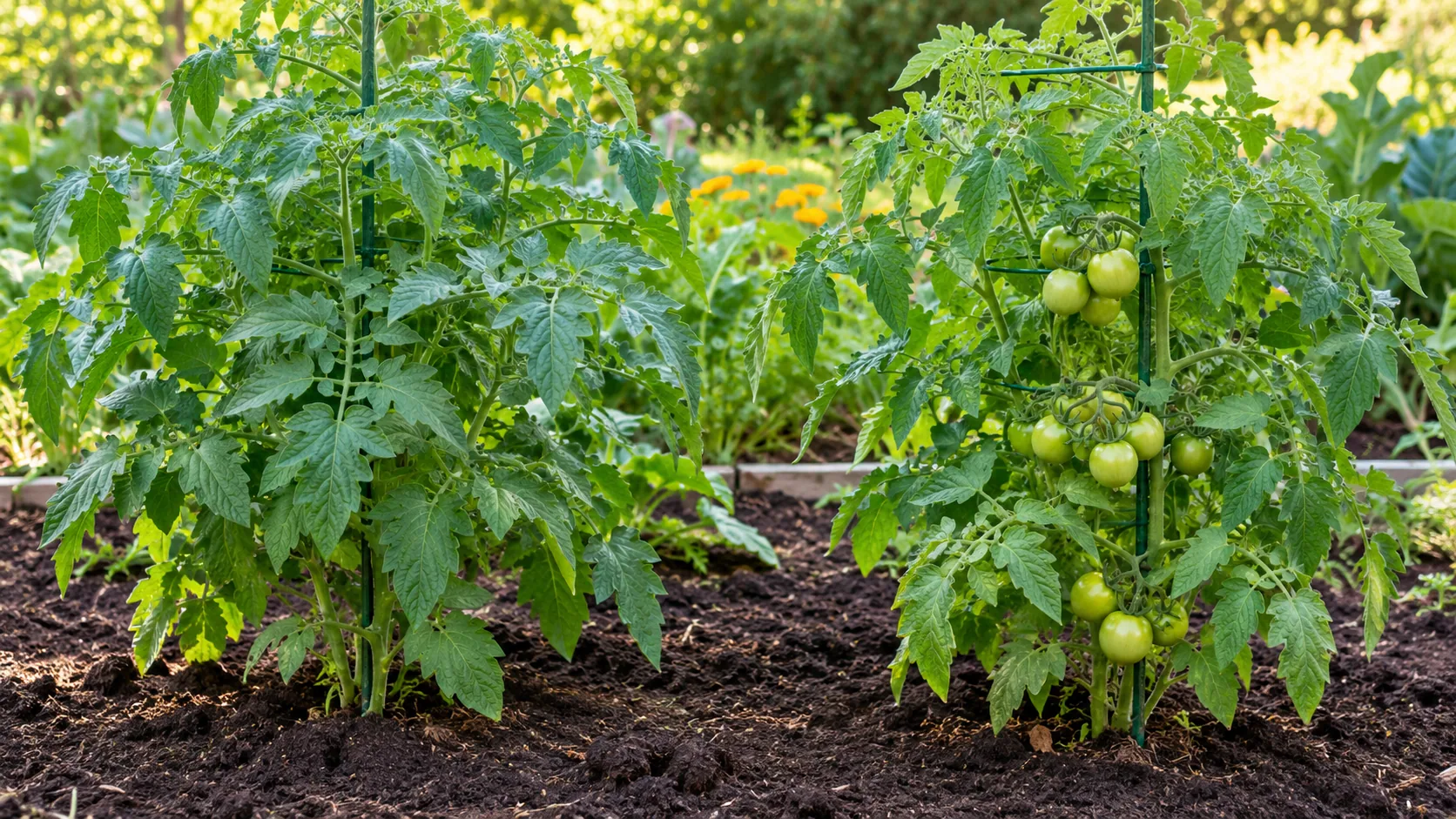
- Young, nonbearing fruit trees should grow approximately 15 to 30 inches per year.
- Bearing trees should produce 8 to 15 inches of new growth.
For Iowa fruit trees near a regularly fertilized lawn, the fruit tree roots will absorb nutrients from the lawn fertilizer. Over-fertilization may actually reduce crop yields.
For Illinois bearing fruit trees after heavy dormant pruning, reduce or omit fertilization. For Oregon home fruit trees, you also can have a laboratory do a leaf and petiole analysis to determine which nutrients are present in leaf tissue in adequate, deficient, or excessive amounts.
Where should organic fertilizer go around the drip line?
The drip line is the outermost portion of the tree where the canopy ends.
Illinois: bearing fruit trees
Broadcast the fertilizer in a circular band starting about 1 foot from the trunk and extending out to the spread of the branches.
Oregon: home fruit trees
Begin fertilizer broadcast at roughly the halfway point between the trunk and the dripline of the tree. Broadcast the fertilizer under the entire canopy of the tree.
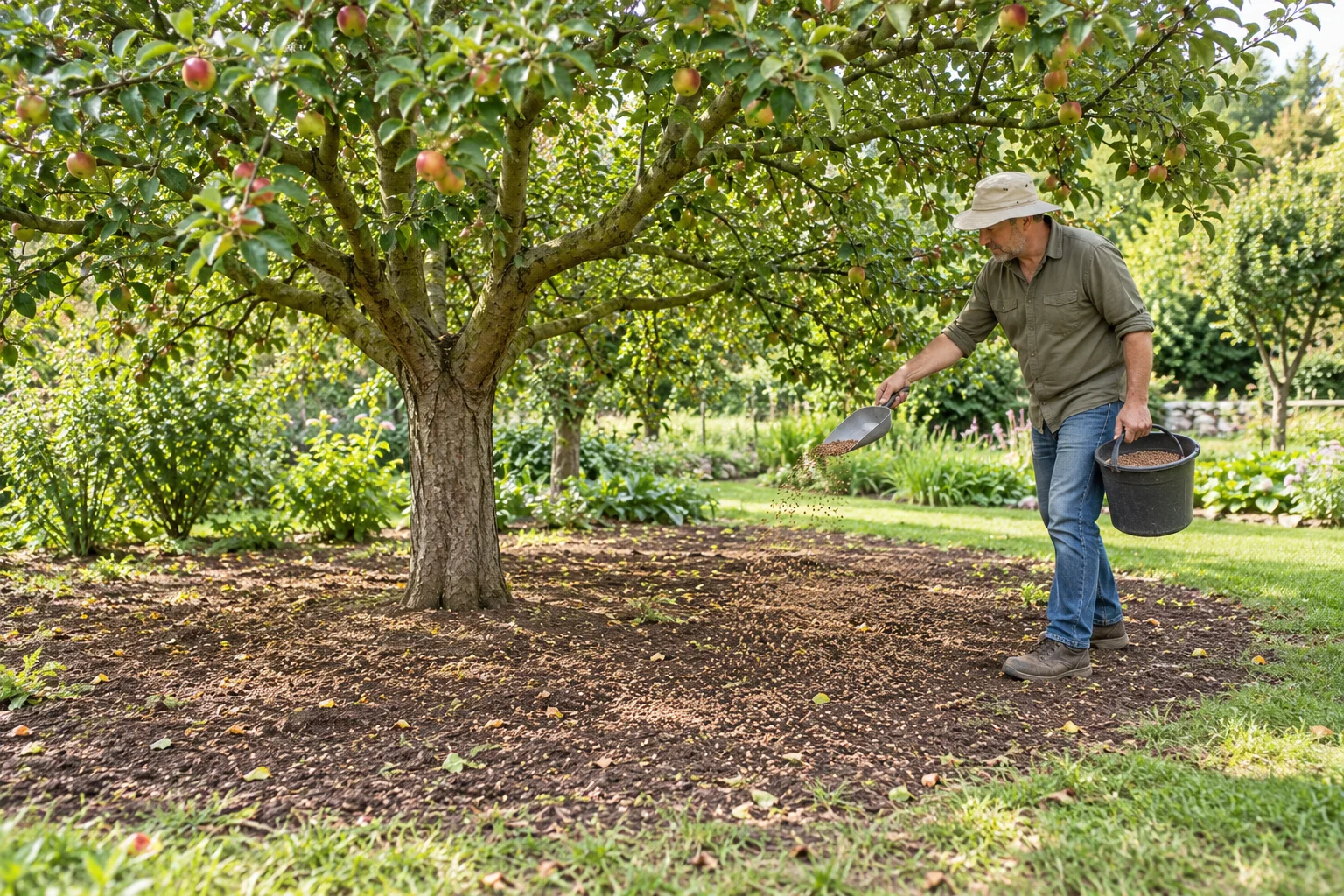
For Maryland fruit plants, if using a dry fertilizer formulation, sprinkle it over the root zone of fruit plants when foliage is dry.
Newly planted trees
For Oregon newly planted fruit trees, allow trees in their first year to grow for several months before applying nitrogen to avoid burning tender roots. One- and 2-year-old trees can be injured if nitrogen is banded around the tree.
When should you fertilize fruit trees?
Choose the regional guidance for your setting.
Spring timing
- For Iowa fruit trees needing fertilizer, apply a balanced fertilizer, such as a 10-10-10, in early spring before bud break.
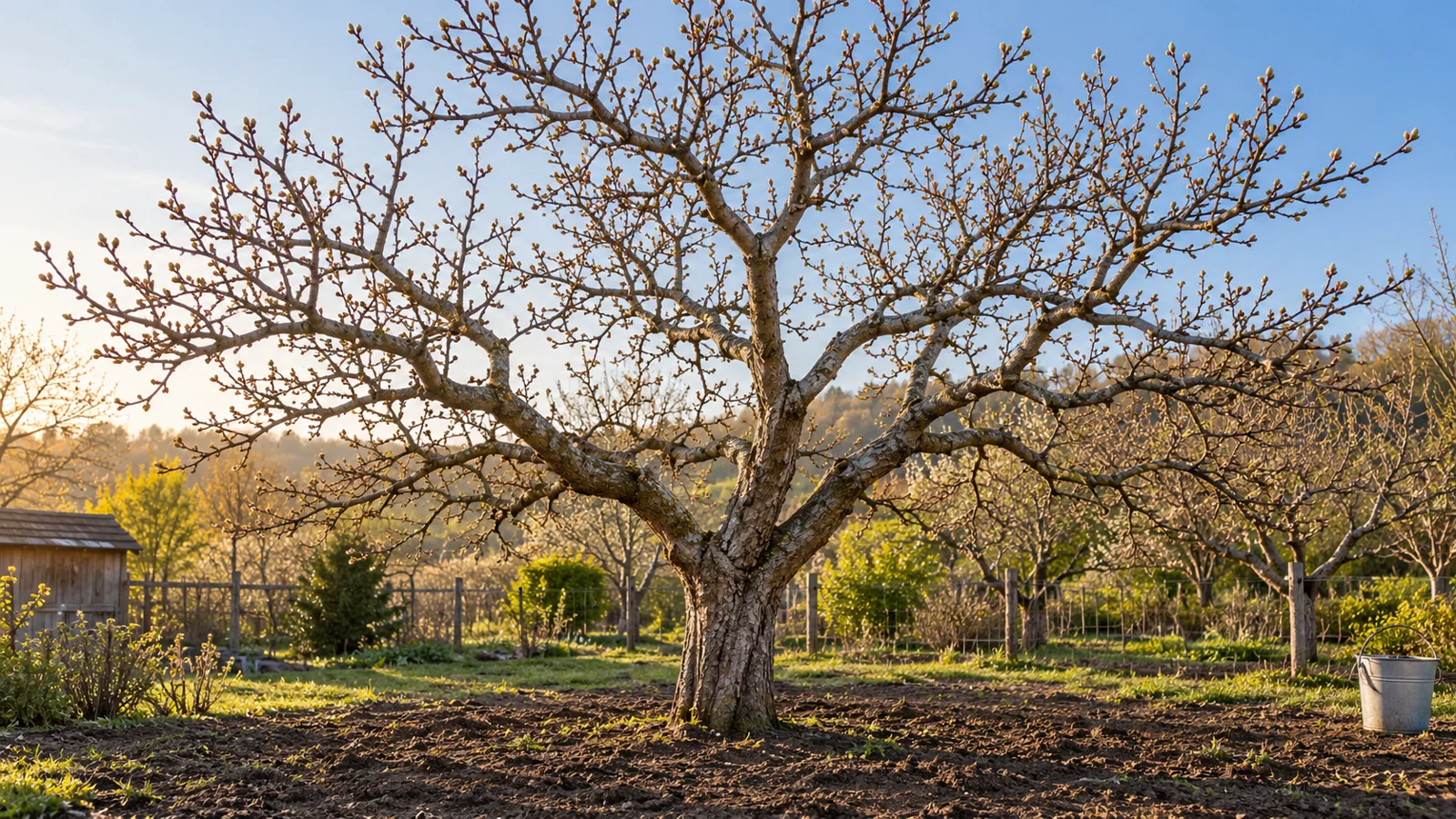
- For Illinois bearing fruit trees needing fertilizer, fertilize in early spring as the buds begin to swell.
- In Maryland, most fruit plants are fertilized in spring at flowering time.
- Oregon guidance schedules application in the spring around the time the trees finish blooming.
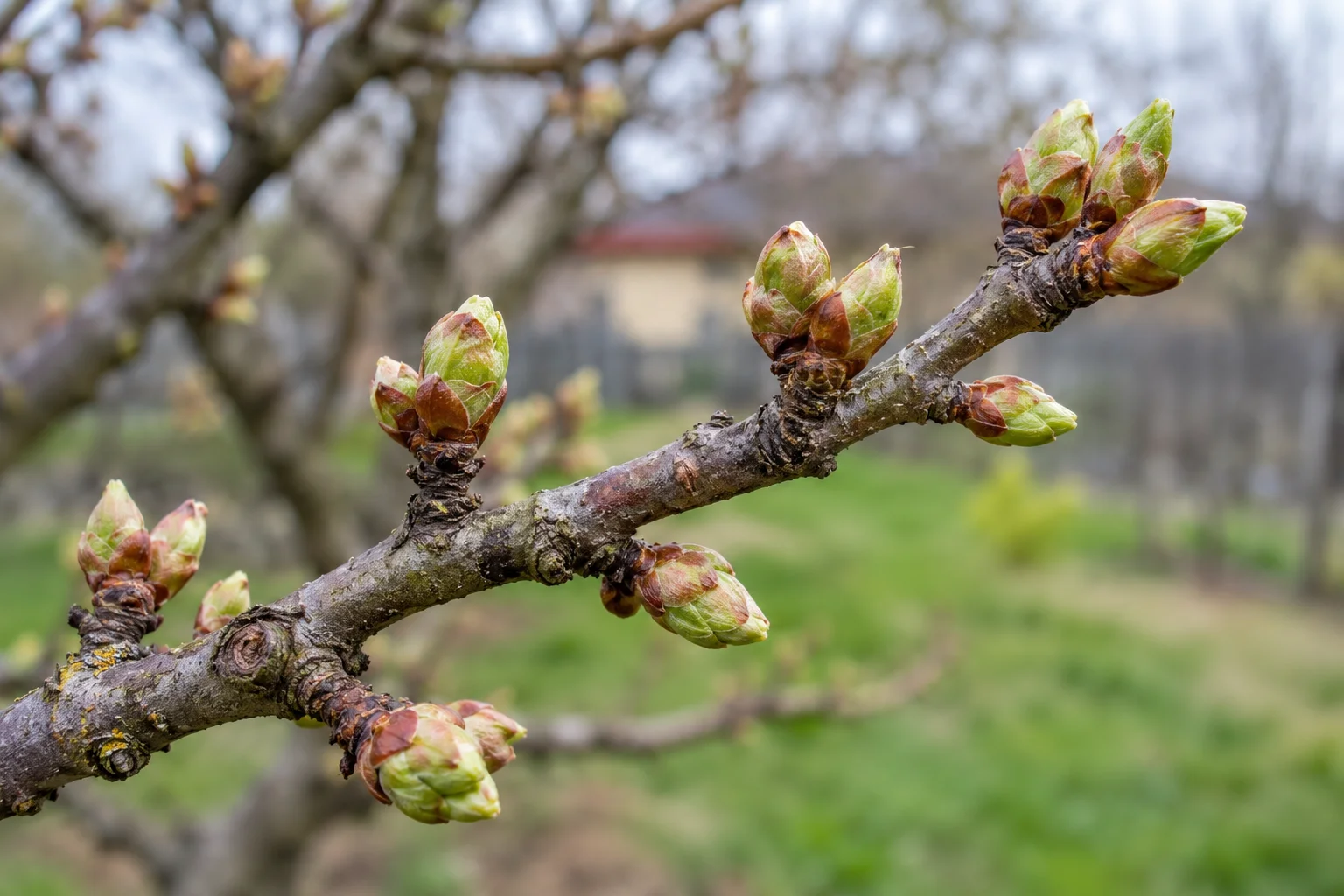
For Illinois bearing fruit trees that need fertilizer, bud swell is the early-spring application cue.
Late-season decisions
For Maryland fruit trees, avoid late summer and fall fertilization because it interferes with the dormancy process (called hardening-off) and can lead to winter injury. For Illinois fruit trees, too much water, abnormally warm fall temperatures, and excessive amounts of nitrogen, alone or in combination, may cause excessive fall growth and predispose the tissue to cold injury.
For Santa Clara County fruit trees after the first year, research indicates that summer fertilizer applications (August to mid-September) are more efficient than late winter (traditional) applications.
How to apply dry fertilizer around an established tree
Use this application sequence from Maryland fruit-plant guidance.
- Follow fertilizer label directions.
- To ensure direct contact with the soil, move mulch away from plants to fertilize and reapply it after fertilizing.
- If using a dry fertilizer formulation, sprinkle it over the root zone of fruit plants when foliage is dry.
- Brush fertilizer off leaves and water it in if rainfall is not expected.
- Once plants are in the ground, do not disturb shallow roots by working fertilizer into the soil.
What is organic fertilizer made of?
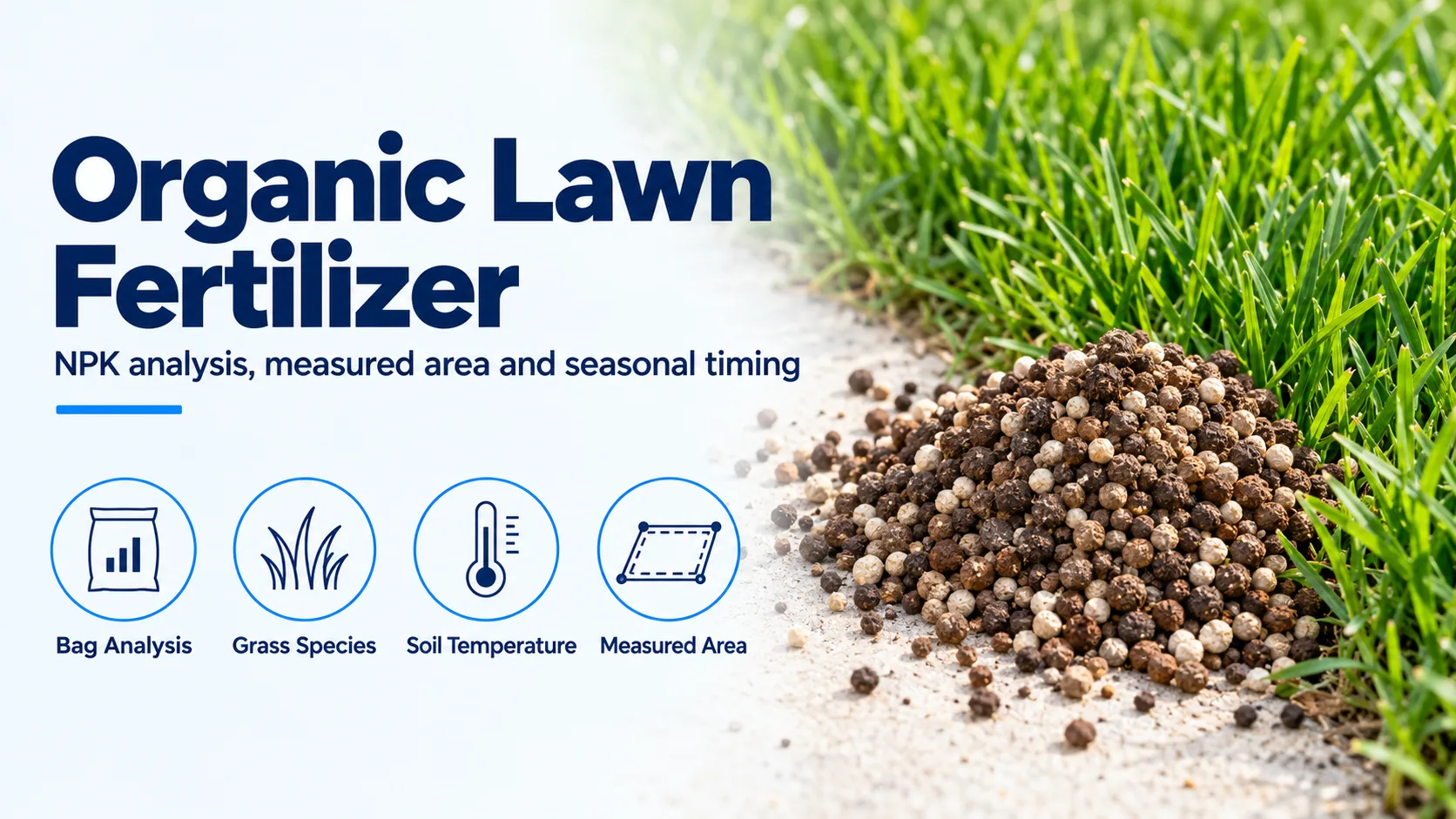
In the biological definition used by Iowa State, organic fertilizers are derived solely from the remains or byproducts of a once-living organism. Common animal- and plant-derived fertilizer examples include manures, blood or bone meals, fish emulsions, alfalfa meal, and insect frass.
In the broader organic-fertilizer category described by Maryland, a few organic fertilizers are inorganic materials (lack a carbon backbone), such as rock phosphate, greensand, and sodium nitrate. A number of products are blends of several organic ingredients and some products contain a combination of organic and synthetic fertilizers.
Well-rotted animal manure varies widely in nutrient content depending on the animal species. Nutrients can also vary with the age and handling of the manure.
Where compost fits
Compost can be applied to the top of the soil around plants once they are established to avoid disturbing roots. Organic matter in the soil not only adds slow-release nutrients directly as a natural fertilizer but also helps to retain nutrients and moisture, especially in sandy soils.
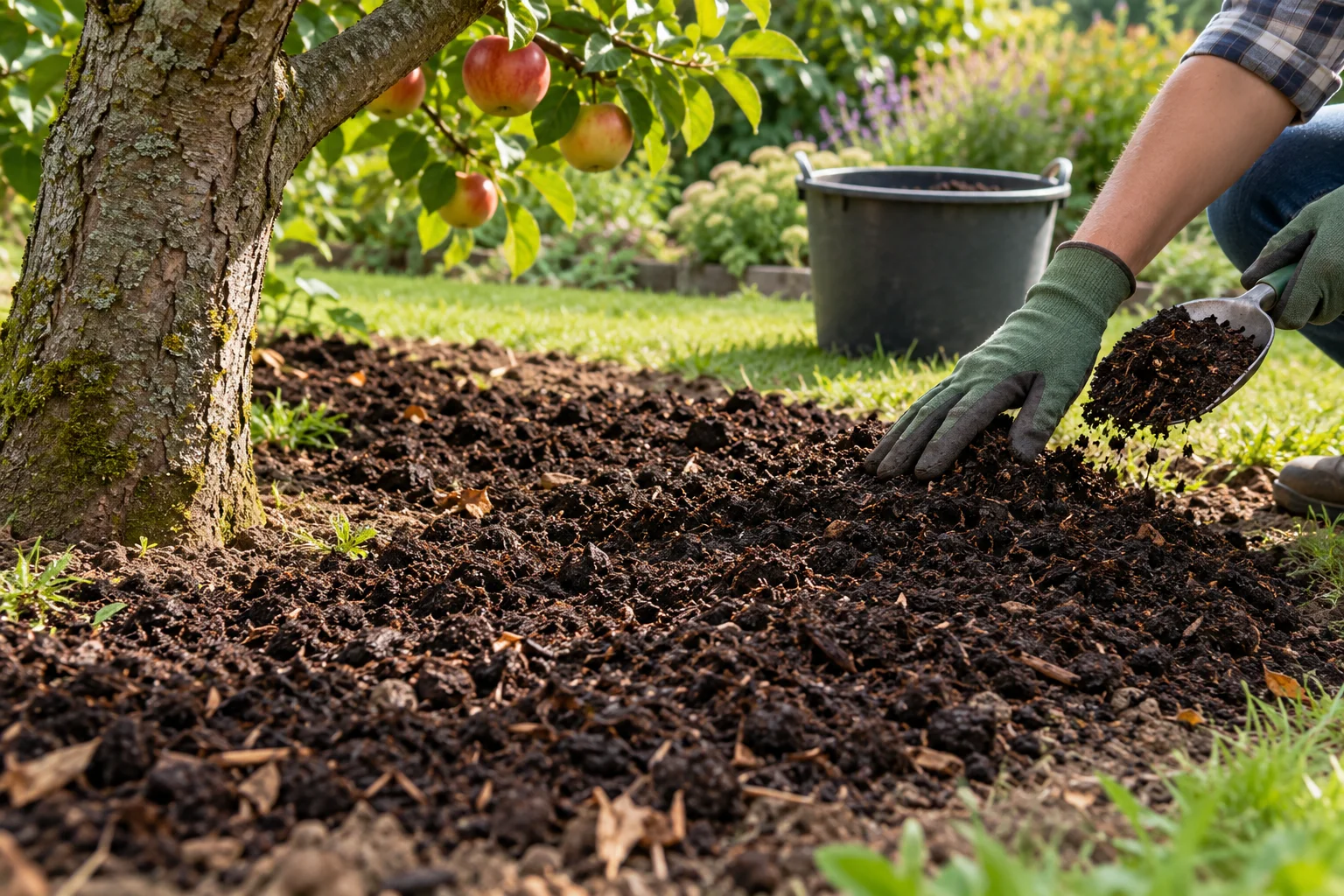
Once plants are in the ground, do not disturb shallow roots by working fertilizer into the soil.
Organic fertilizer vs synthetic: what changes?
Plants do not differentiate between nutrients from organic and chemical fertilizers; the form absorbed by plant roots from both sources is identical. Soil bacteria and fungi must act on most organic nutrient sources to change them into a usable form.
For the organic fertilizers described by Iowa State, the nutrients are released to plants relatively slowly over time, allowing for less frequent applications. Some synthetic fertilizers, like sulfur-coated urea, are designed to release nutrients slowly. Synthetic fertilizers do not burn plants if applied according to label instructions.
How much should you apply?
Follow fertilizer label directions. For Maryland fruit plants needing fertilizer, if your phosphorus and potassium levels are reported as “optimum”, “high”, or “excessive,” you can fertilize with nitrogen-only fertilizers.
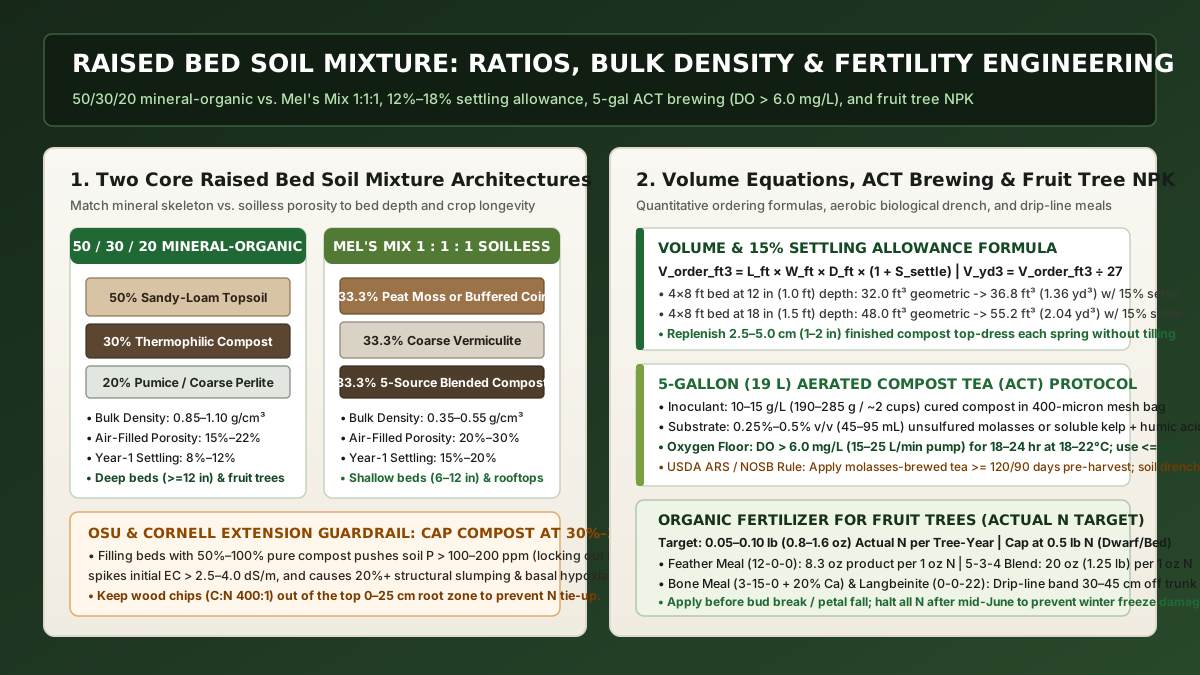
To calculate product quantity in the Maryland fertilizer example, divide the recommended amount of nitrogen by the nitrogen fraction of the fertilizer.
Read the product example in context
Maryland illustrates a complete organic fertilizer made from poultry manure with a guaranteed 5-4-3 analysis. For that illustrated product, a 10 lb. bag contains 0.50 lbs. nitrogen.
Continue with our organic fertilizer guide by crop for related reading.
Questions before you feed
Should every mature tree be fertilized?
In Santa Clara County guidance, fully mature fruit trees may not need fertilizing.
Should fertilizer be dug into established roots?
Once plants are in the ground, do not disturb shallow roots by working fertilizer into the soil.
Can synthetic fertilizer also release slowly?
Some synthetic fertilizers, like sulfur-coated urea, are designed to release nutrients slowly.
Sources
- Oregon State University Extension — Fertilizing your garden: Vegetables, fruits and ornamentals
- Illinois Extension — Tree Care
- Iowa State University Extension — Should I fertilize my fruit trees?
- UF/IFAS Extension Miami-Dade County — Fertilizing Fruit Trees
- University of Maryland Extension — Fruit Plant Care
- Illinois Extension — Environmental Challenges
- UC Master Gardeners of Santa Clara County — Fruits & Nuts Tips
- Iowa State University Extension — Selecting and Using Organic Fertilizers
- University of Saskatchewan — Fertilizers: Natural or Synthetic?
- University of Maryland Extension — Garden Fertilizer Basics