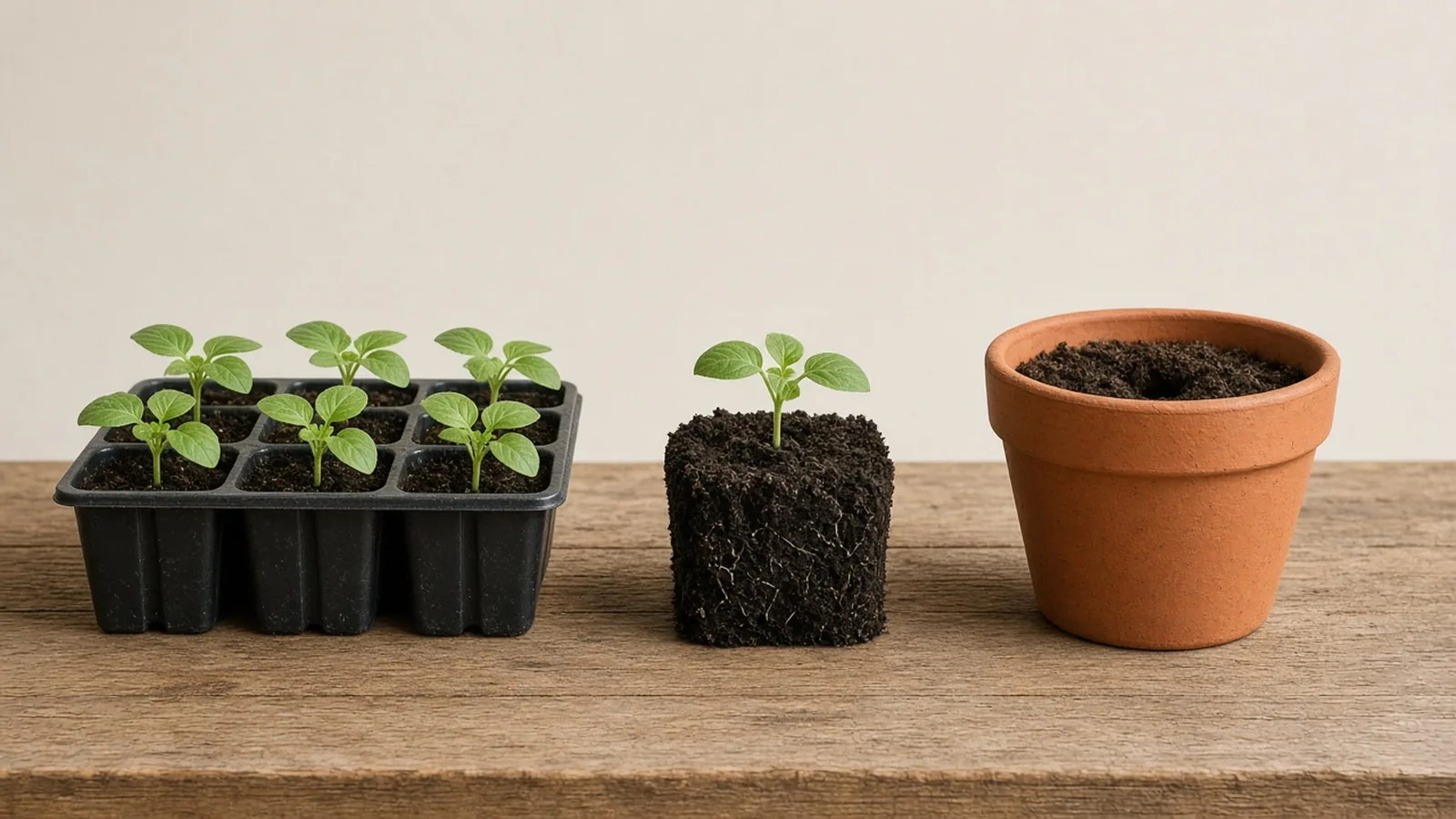
Pulling a crowded seedling up by the stem damages the stem, and the roots often stay in the tray. The way to transplant seedlings from a tray to pots is to match the tray: a cell plug is a whole block of mix, and an open flat has roots woven from plant to plant.
Push the plug up through the drainage hole with a pencil or a similar tool. In an open flat, dig beside the stems and tease the seedlings apart. Set the plant in the next pot at the same depth it already grew. The seedlings on this page are still indoors. They are crowded, and they are not ready for the garden.
Known Source Farms is an independent information site. It does not sell pots, mix, or plants, and it is not the Texas farm that previously used this domain.
| Check | What you see | What you do |
|---|---|---|
| Roots | White roots on the plug, or a thick mat already pressed along the bottom | Lift by a leaf and look. Move while roots are visible. If a thick mat is already there, move now. |
| Leaves | Neighbor leaves overlapping, or the first true leaves on a small plant in a shared flat | Use that leaf and root picture. A count of days waits behind it. |
| Drainage | Holes in the next pot, and moist soilless mix in the hole | Fill that pot before you lift. Empty the saucer after you water. |
| Depth | The mix line on the stem where it sits today | Plant to that same line. Tomato is the only deeper set named below. |
The mix you put in the new pot is a separate decision. Copy the bag onto the seed-starting mix and potting soil sheet before you fill the pot.
Tell a cell plug from an open flat
A cell pack is a tray of small pots joined together. University of Maryland Extension says the walls keep each plant’s roots from tangling with the neighbor, which is why a cell comes out as one plug. An open flat is the other case: seeds were sown in a shared tray, in rows or broadcast, with no wall between the plants. Maryland calls the move out of that shared flat potting up, or pricking out. The roots have grown through one body of mix.
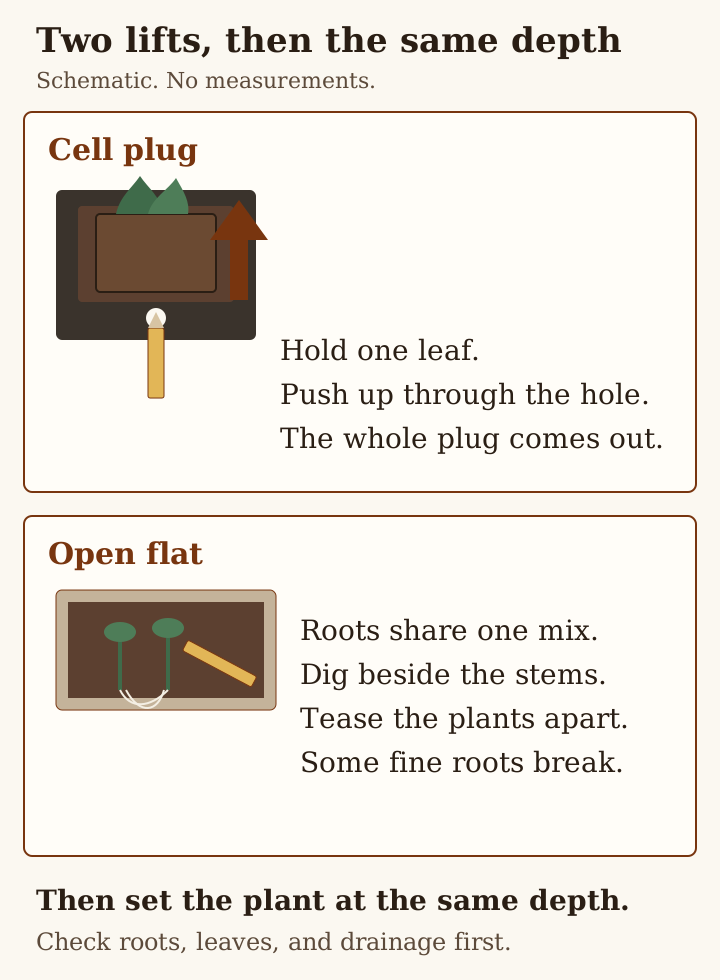
Figure 1. The two lifts, then the same planting depth. Schematic, not to scale. The steps follow Utah State University Extension’s indoor transplanting section (18 February 2025).
Utah State splits the same job in one paragraph. From an open flat, use a pencil, a knife, or a similar tool to dig the seedlings and gently tease them apart. From a small cell pack, push the root ball up from the bottom until the plug leaves the cell. Both lifts end the same way: moist soilless mix in the next container, a hole, the seedling set in, the mix firmed, then water.
Maryland’s tool list for the shared flat is a butter knife, a chopstick, or a popsicle stick. Those are the same kind of small tool. A forum preference for one brand of dibber is a personal tip. The check is still the roots and the leaves, not the brand and not a fixed number of days.
A soil block follows the plug branch. Maryland describes a soil blocker as a press that forms moist mix into cubes. The roots stay inside that cube. Move the cube whole.
Check roots, leaves, drainage, and depth
Utah State’s figure caption says to pot up when a healthy number of roots are visible, and before those roots form a dense mat. The same fact sheet’s indoor section also says seedlings are ready when leaves start to overlap the neighbors, or when the roots are so dense that they form a thick mat at the bottom. Read those together. Look early enough to see roots. If the mat is already thick, the cell is past the caption’s preference, and the plant still needs a larger pot. Utah State makes that second point in the wilting note: plants that stay wilted usually need a larger pot, and a dense mat of roots is the sign.
Lift by a leaf to look. Utah State and Maryland both say the stem is the fragile part. Pinch one leaf that is still attached to the plant.
Leaves tell you about crowding. Overlapping leaves are Utah State’s cue. In a shared flat, Maryland says the useful moment is soon after the first true leaves appear above or between the seed leaves, while the plants are still small. Crowded seedlings compete, and woven roots are harder to separate later.
Maryland gives a planning range for three crops that were sown one seed to a cell: move tomato, pepper, and eggplant into a larger container 2 to 3 weeks after germination. A second Maryland list is easy to mix up with that one. It is the time to keep plants indoors before they go outside: 2 to 4 weeks for leafy greens, 5 to 6 weeks for tomato, and 8 to 10 weeks for pepper, eggplant, and onion. Those outdoor-start weeks are not the pot-up decision. On the morning you lift, look at the roots and the leaves. If roots are visible and true leaves are out, you can move earlier than the 2-to-3-week mark. If that mark arrives and the roots are still sparse and the leaves do not overlap, leave the plant in the tray. Write down the roots, the leaves, and the date. The date is only the record.
Drainage is the pot you are moving into. Maryland says a seed container needs drainage holes and at least 2 inches of depth. That 2-inch figure is the minimum for a sowing container. It is not a diameter for the next pot. The next pot needs holes of its own. Fill it with moist soilless mix. Utah State says to make the hole before you set the plant. If the mix contains dry peat, Maryland says to wet it first until it feels like a wrung-out sponge, because dry peat sheds water. After you water the finished pot, throw out the water that drained into the saucer. Utah State says that leftover water should not soak back up. Salts from fertilizer and from the water supply build up when the pot keeps reabsorbing the drainage.
Depth for this indoor pot is the line the seedling already grew to. Tomato is the one crop with a deeper option, in the section below. Every other seedling on this page stays on that line.
Push a cell plug up from the bottom
Turn the cell so you can see the hole in the floor. Support the plant by one leaf. Push a pencil, or another slim tool, up through that hole until the plug loosens and slides out. The mix should come with the roots. Utah State says this bottom push is the easier way to get a seedling out of a cell, and the same fact sheet says the same bottom push is the better way later, when you take a plant out of a pot for the garden. Pulling from the top is how the stem breaks.
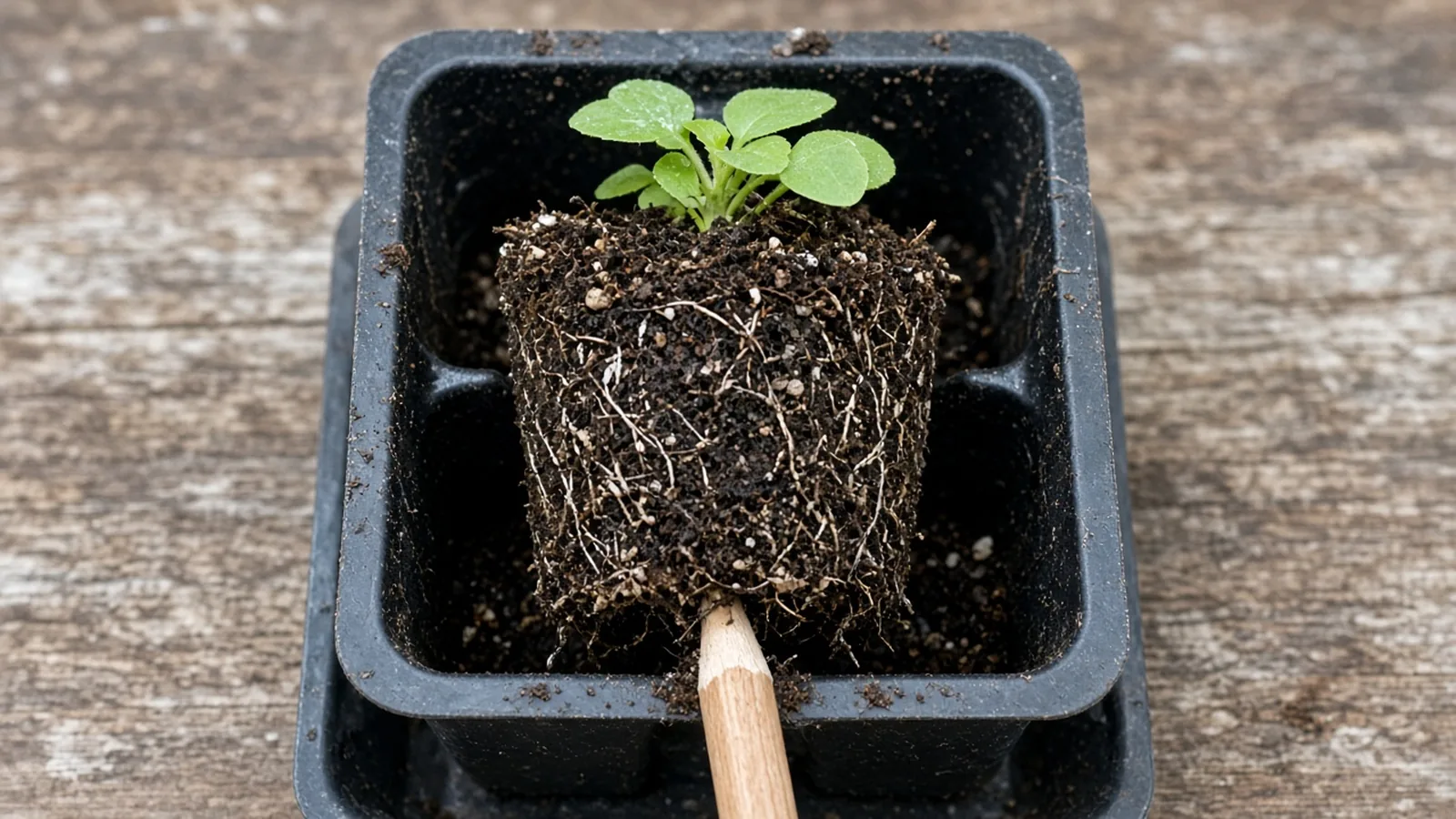
Figure 2. Illustration of the upward push. In a real cell the plug is still inside the walls while the pencil comes through the drain hole. The drawing shows the pencil and the plug so you can see both.
Set the plug into a hole that brings the mix to the same height it had in the cell. Firm the new mix with your fingers. Water until it runs from the holes, then discard what collects underneath.
Cucumber, squash, melon, corn, and beans often skip this move. Maryland says those crops are grown for 2 to 4 weeks as transplants and that there is no need to pot them into a larger container. Sow two or three seeds in the cell and keep the strongest plant. If one of those plugs is already a thick root mat, or the leaves of neighbors are overlapping, the Utah State crowding cue still says the cell is tight. Use the bottom push if you do move it. The usual Maryland plan for those crops is to leave them in the sowing cell until you plant outside.
Tease seedlings apart from an open flat
Water is already in the routine if the mix is moist. Utah State’s indoor steps start with the tool, not with a calendar. Slide a pencil, a knife, a butter knife, a chopstick, or a popsicle stick into the mix beside the seedling. Lift a small group, the way Maryland describes, and then tease that group into single plants. Hold each plant by a leaf.
Roots will be intertwined. Utah State says some of them will break. That break is part of separating an open flat. The goal is a seedling with enough mix and enough root to stand in the new hole, not a bare root that you have washed clean. The Royal Horticultural Society, writing about plants lifted for a bed, says trimming roots or leaves to make handling easier reduces the plant’s ability to recover. Leave the roots and the leaves you did not already break.
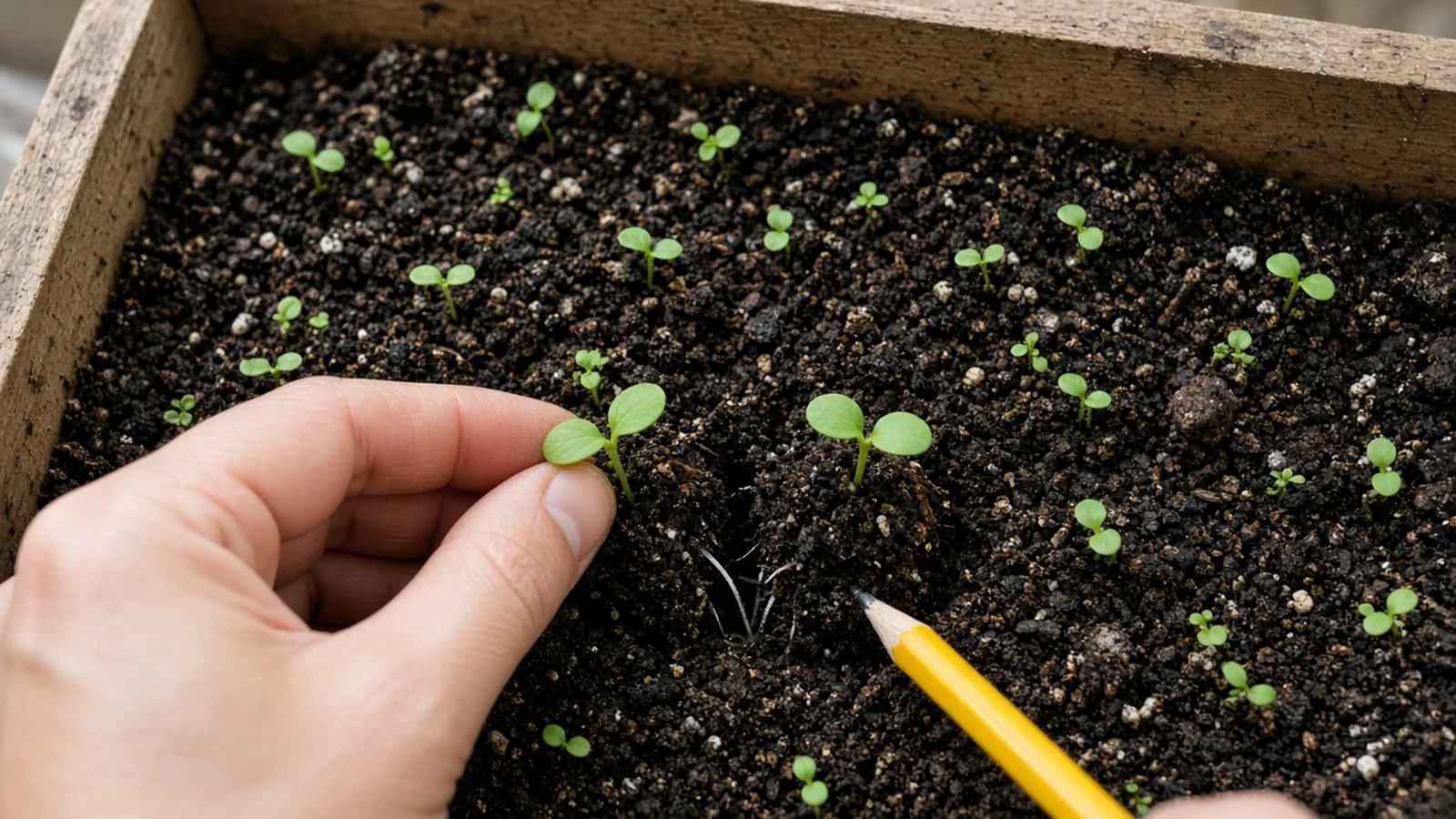
Figure 3. Illustration of an open flat. Keep most of the mix around the roots. The few pale strands in the gap are the woven roots you are teasing apart. Some of those strands will break.
Make the hole deep enough for the same depth the seedling had in the flat. Utah State’s indoor sentence is specific on this: the hole should let you plant at the same depth the seedling grew in the open flat. Firm the mix, water, and empty the saucer.
Beetroot is the cluster exception inside this branch. The Royal Horticultural Society says to raise beetroot in cell trays as clusters of plants. A cluster is one plug. Teasing it into single roots is a different crop’s habit. Leave the beet cluster whole and move it with the cell-plug push if it is already in a cell.
Tomato is the depth exception
The indoor depth on this page is Utah State’s same-depth set, for the cell plug and for the open flat. University of Maryland’s potting-up section describes a different set: the leaves and the growing point sit only slightly above the mix, and most of the stem can be buried. Those are two instructions. This page follows the Utah State indoor sentence. It keeps Maryland’s wording on the record so the two depths are not averaged into a midpoint.
Tomato is the species Utah State names for a deeper planting. In the outdoor section of the same February 2025 fact sheet, Utah State says tomatoes can develop roots along the stem and may be planted deeper if desired. The hole for other outdoor transplants, in that same section, is only as deep as the root mass, so the plant sits at the level it had in the container. Maryland’s tomato note is also outdoor, and it is for a transplant that has become very tall: dig a trench, lay the stem in it, and leave 2 or 3 sets of leaves above the soil. The buried tomato stem grows roots.
Use that deeper set for tomato only, when you are following one of those tomato sentences. Cabbage, lettuce, pepper, and the other seedlings in the tray stay at the same depth for this indoor pot. Utah State names tomato for the deeper set.
When you later set a cell-grown or pot-grown plant into a bed, the Royal Horticultural Society also says to plant no deeper than the plant sat in its container. That agrees with the same-depth indoor set. RHS bare-root brassicas are a different garden job. Those plants are lifted with the soil knocked off the roots, and brassicas go into the hole up to the true leaves. Leeks go into a deep dibbed hole and are watered so soil washes around the roots. Those bed methods stay in the garden. They are not the indoor tray-to-pot steps.
Crops that need a different plan
The Royal Horticultural Society’s transplanting page is about moving vegetables into beds. It does not show the cell-plug push or the open-flat tease. What it does list is which crops are awkward to move at all, and which raising method RHS prefers before that outdoor planting. Use the awkward list before you decide a crowded tray should be potted up.
| Crop | How RHS says to raise it | What that means indoors |
|---|---|---|
| Beetroot | Cell trays, as clusters | Move the cluster as one plug. |
| Carrot | Short-root cultivars in small pots, and best left unattempted for most gardeners | A carrot tray is a poor candidate for this pot-up. |
| Florence fennel | Small pots, ideally biodegradable, to limit planting shock | Keep the pot with the plant if the pot is meant to go into the soil later. |
| Parsnip | Not worth attempting for most gardeners | Skip the pot-up. RHS does not treat parsnip as a transplant crop. |
| Radish, swede, turnip | Cell trays, with care | A cell plug can move. An open flat of these roots is the fragile case. |
| Sweetcorn | Deep cells, pots, or sweet pea tubes | Maryland’s usual plan is to leave corn in the sowing cell. |
RHS also lists tomato, pepper, aubergine, brassicas, lettuce, onion, leek, celery, herbs, courgette, pumpkin, squash, and beans among crops that can be raised in cells or small pots. That list is about which plants can stand a later move into a bed. It does not give one pot diameter for all of them.
Maryland’s starting-cell areas are crop-specific too, and they describe the tray you are leaving, not the pot you are filling. Greens such as lettuce, beet, spinach, and kale: 3 to 6 square inches. Squash, cucumber, broccoli, and cabbage: 4 to 9 square inches. Tomato, eggplant, and pepper: 9 to 16 square inches. A tomato that started in a 9-square-inch cell needs more room than a lettuce that started in a 3-square-inch cell. This page does not convert those areas into a single next-pot size.
Where this indoor move stops
Stop when the seedling is watered in the next indoor pot. Hardening off, the gradual introduction to outdoor sun, wind, and night temperature, is the following job. Utah State gives it a separate section. The steps above do not substitute for it.
A thick circular mat of roots, at outdoor planting time, is also a different step. Utah State says you can make several shallow vertical cuts in that mat, or gently break the roots with your hands, before you plant into the garden. That is a vegetable transplant going outside. It is not a method for pruning the roots of a woody plant, and it is not part of the indoor lift. Indoors, you move the plug before you are cutting it.
How many later indoor moves you will make depends on the starting container, how fast the plant grows, and how long it stays inside before the garden. Utah State states those three conditions and does not give a universal count.
If you add fertilizer at this move, Utah State says a slow-release granular fertilizer can fit a seedling going into a larger container. Use the rate printed on that fertilizer. Record whether the new bag prints a starter charge on the mix sheet. A blank fertilizer line stays unknown. This page does not invent a dose.
The Royal Horticultural Society says damage to roots at transplanting slows growth, can delay maturity, and can reduce the final yield, and that a severe check can lead to bolting in crops grown for roots, hearts, or curds. That is the reason to push a plug from the bottom and to tease an open flat gently. It is an RHS description of what root damage does. It is not a promise that this pot-up will produce a larger harvest.
Other home-growing notes are on the article list.
Method and sources
Compiled on 12 October 2026 from Utah State University Extension’s peer-reviewed fact sheet on seedling culture and transplanting (18 February 2025), University of Maryland Extension’s seed-starting guide (updated 14 August 2026), and the Royal Horticultural Society’s vegetables transplanting page (read 12 October 2026; the page itself does not show a publication date). The cell-plug push, the open-flat tease, the same-depth indoor set, and the tomato deeper-set are Utah State’s wording, kept apart from Maryland’s “bury most of the stem” instruction. RHS is used for species and root cautions about later planting into beds. Forum posts about tools and timing were not used as the procedure. Week ranges and cell areas are the extension figures cited next to them. They are not measurements from a tray grown for this page.
This site does not sell seed, mix, or pots, and it is not the Texas farm that previously used this domain.