To take a soil sample from your garden, choose the laboratory and test first to avoid submitting the wrong material. Separate areas with different growing conditions or amendment histories, collect soil from several places within each area at the lab’s required depth, mix each area’s portions, and submit the amount and container that lab specifies.
Keep each garden area and its laboratory instructions together on one record. The worksheet below leaves depth, quantity and packaging blank so you can copy your chosen lab’s requirements without combining incompatible advice.
Choose the test before collecting soil
A nutrient question, a pH question and a contamination question can require different tests. Oregon State University Extension distinguishes these purposes and points readers toward laboratory selection. Tell the lab what you want to find out and what you intend to grow. A routine fertility report should not be treated as proof that soil is free of contaminants.
Also tell the lab what fills the bed. For its own testing service, NCDA&CS excludes potting mixes and organic material containing less than 50% native mineral soil from ordinary soil submissions; it directs those materials to soilless-media analysis. That is a rule for this laboratory, rather than a cutoff to assume elsewhere. If you do not know the ingredients, keep that field unknown and ask the lab which service accepts the material.
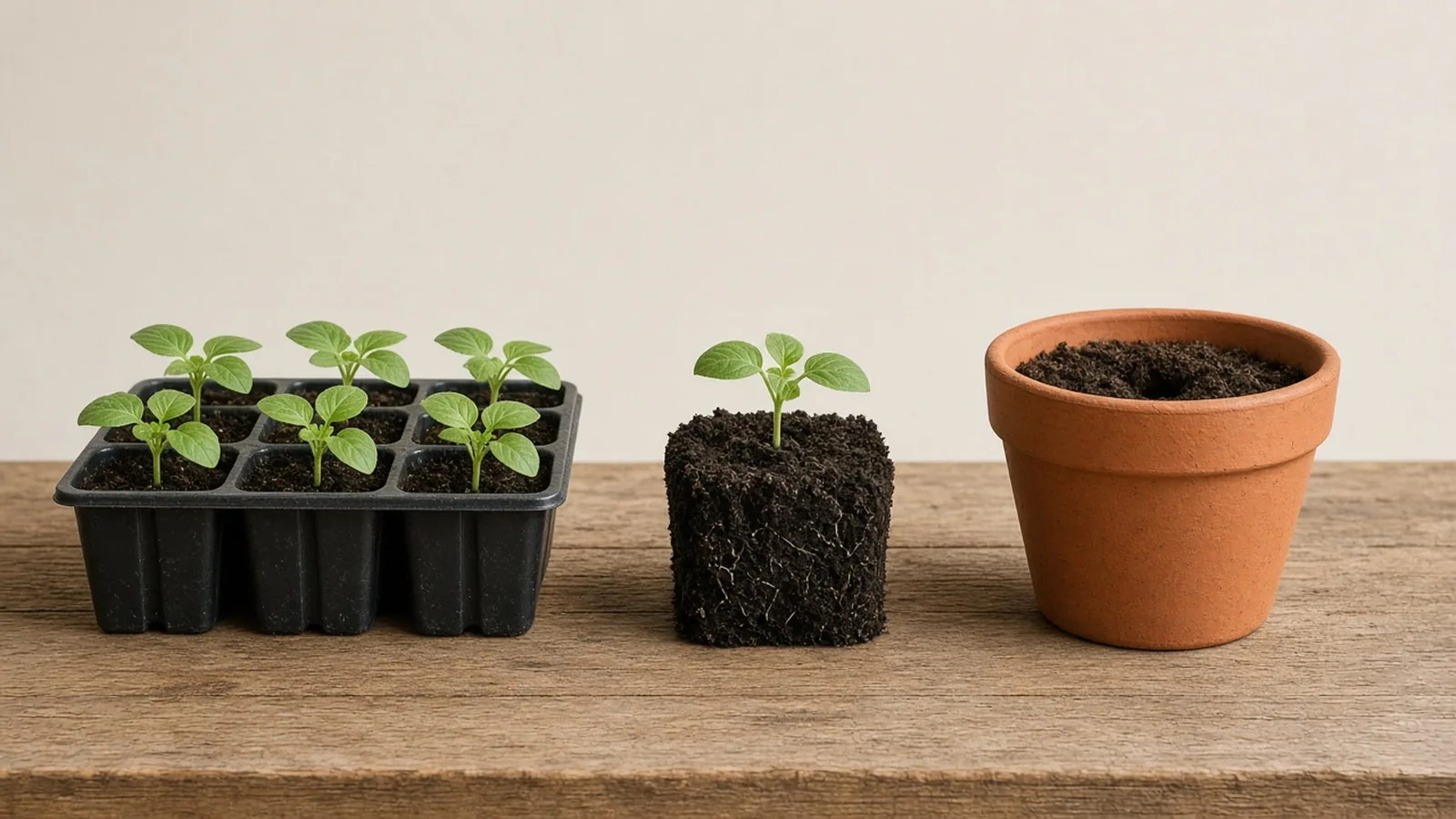
For a seed tray or container, the seed-starting mix and potting-soil guide helps you read the bag. The soil-sampling checklist here concerns garden beds; it does not turn a potting mix into mineral soil.
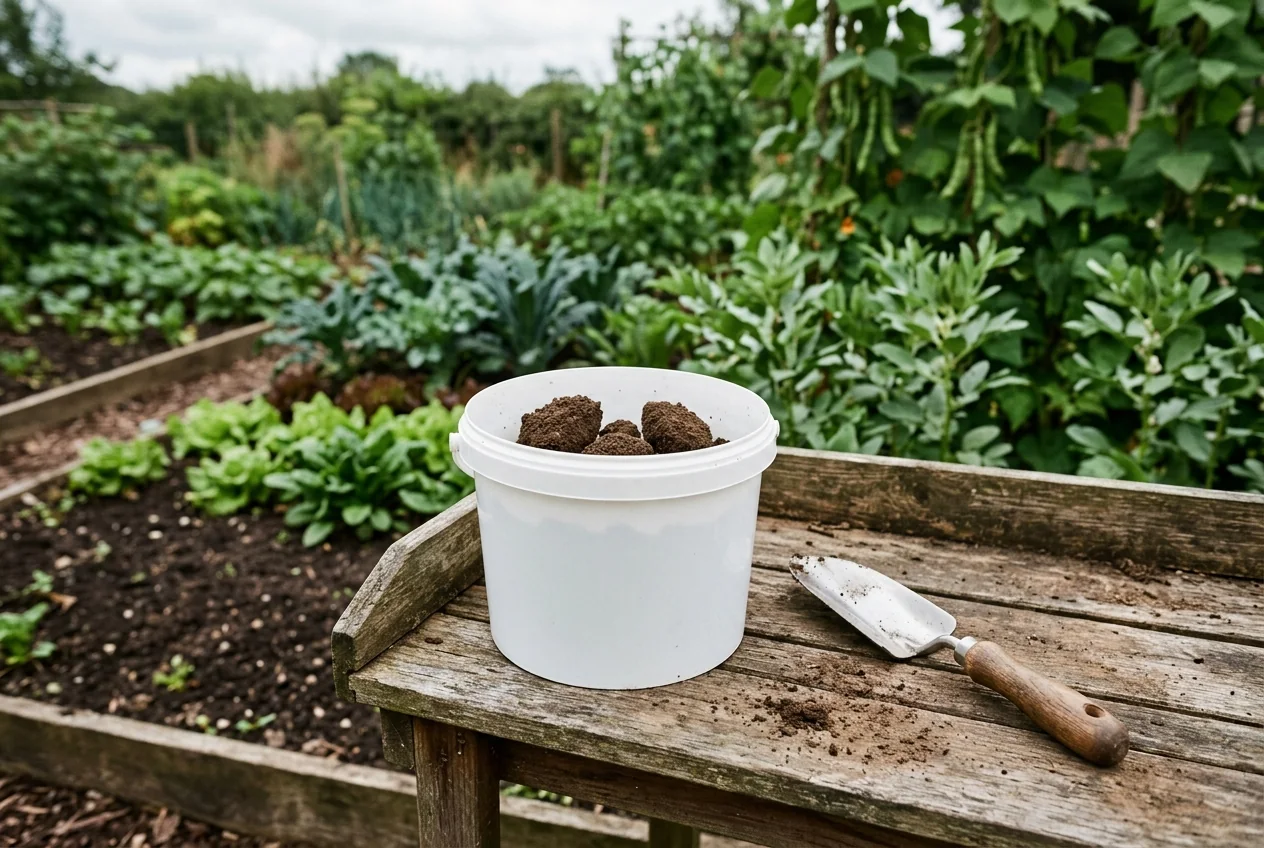
Fill in one record for each sample area
Start with a rough sketch of the garden and name the areas you plan to test. Iowa State’s guidance groups places managed similarly and gives the vegetable garden and lawn as separate examples. Cornell advises keeping an unusual trouble spot separate when you want to assess average fertility elsewhere.
As a planning example, a bed recently given manure and a bed with a different amendment history deserve separate entries before you decide what to collect. Write the history down and let the chosen lab resolve any uncertainty about combining them. Mixing everything first removes that choice.
Copy this table for each area, or download the blank soil-sample record as a CSV. Open it in a spreadsheet and add a row for each planned sample. The blank cells are intentional: fill them from your records and the receiving lab’s current instructions.
| Record field | Your entry |
|---|---|
| Sample ID and bed or zone on your sketch | ____________________ |
| Soil or growing medium; known ingredients | ____________________ |
| Past crop and intended crop | ____________________ |
| Compost, manure, lime and fertilizer history; dates | ____________________ |
| Chosen laboratory and test name or code | ____________________ |
| Instruction page or form; date checked | ____________________ |
| Required sampling depth, with units | ____________________ |
| Required number of collection points | ____________________ |
| Final amount to submit, with units | ____________________ |
| Drying instructions and required container | ____________________ |
| Form, crop code, payment and delivery instructions | ____________________ |
| Collection date; ID checked against the form | ____________________ |
| Unresolved question to ask the lab | ____________________ |
If a number is missing or two instructions disagree, leave the field blank until the lab answers. Do not average the numbers or borrow the missing part from another laboratory.
How do the source instructions differ?
These examples show why the worksheet starts with a laboratory. They are separate protocols, checked on 15 October 2026; use the current instructions supplied by the service receiving your sample.
| Source | What its page says | What to enter or confirm |
|---|---|---|
| NCDA&CS collection page | Vegetable gardens: 6–8 inches deep; 8–10 random locations. Mix in a clean plastic bucket and fill its official box to the red line. | Use these values only for the applicable NCDA service. Confirm that your material belongs in its soil-testing program. |
| Cornell Cooperative Extension, Sullivan County | About 10–15 collection locations and about two cups per composite sample. Its tool and depth sections give conflicting garden-depth instructions. | Ask the receiving service to confirm depth. Leave that field blank; this article does not choose between the conflicting passages. |
| OSU Extension soil-testing Q&A | Separates test purposes and links to collection resources. | Obtain the chosen laboratory’s actual collection and submission protocol before entering depth, count or container. |
The Cornell quantity is not a replacement for the NCDA box’s fill line. Likewise, a bag accepted by one service does not establish how another wants soil delivered.
Collect and mix soil within each area
Once the record is complete, take it outside with the sampling equipment. Use clean tools and a clean plastic bucket. NCDA specifically warns against brass, bronze and galvanized tools or containers because they can contaminate the sample.
Follow this sequence for each sample ID:
- Find the area on your sketch. Keep its record available so you use the right depth and collection count.
- Take a representative slice or core at each location. Cornell describes cutting a vertical slice from the face of a hole. Use the depth confirmed by your lab throughout that sample area.
- Keep unusual areas separate. A poor-growth patch should retain its own identity rather than disappear into a garden-wide average.
- Combine only the portions assigned to that ID. Break up clumps and mix thoroughly, then take the submission amount from the mixture according to the lab’s instructions.
- Prepare the next area with clean equipment and its own record. Do not carry unidentified leftover soil into the next sample.
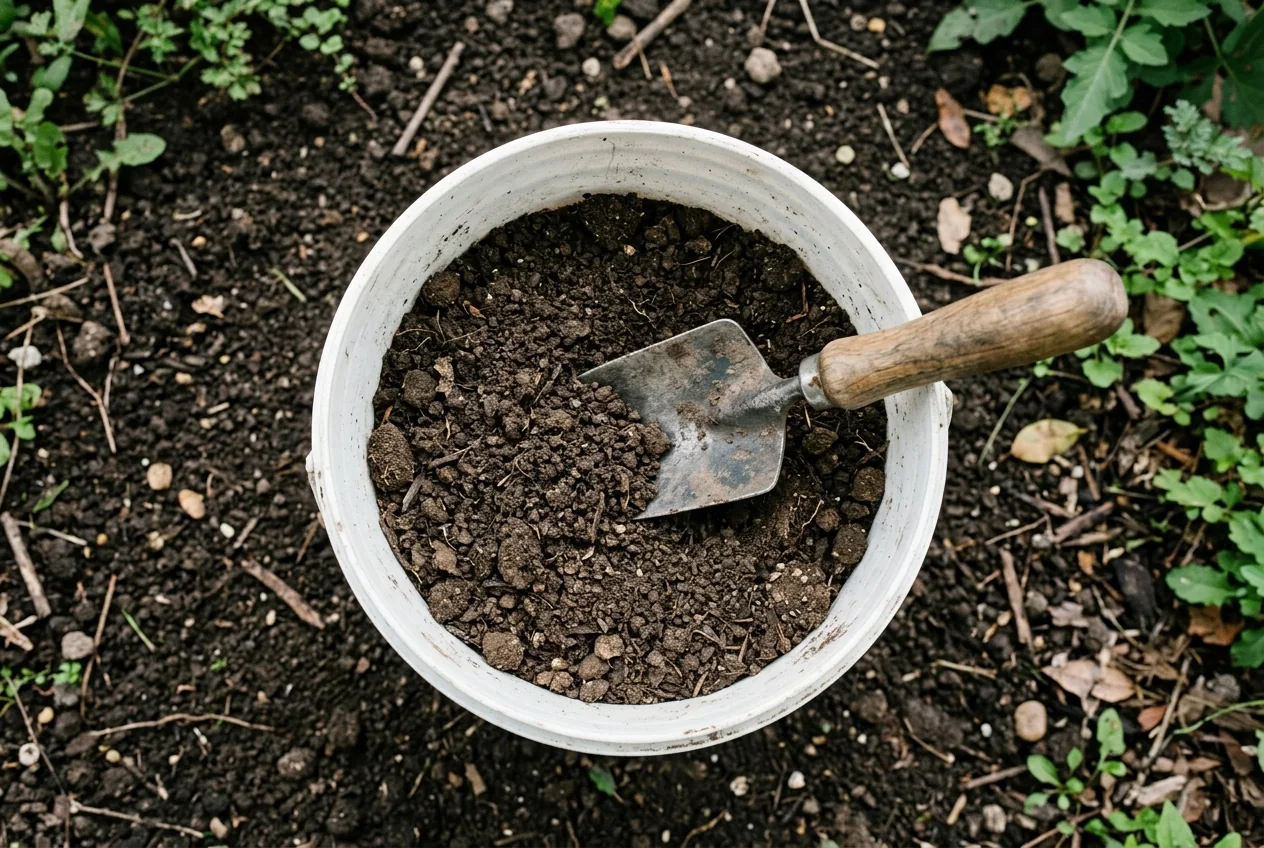
A composite sample is the mixture representing that particular area. Several collection points become one submitted sample; several differently managed areas do not automatically become one sample.
Dry and package the sample for the receiving lab
Avoid collecting overly wet soil. Cornell says not to bring wet samples and, if necessary, to spread them on paper and allow room-temperature drying. Check the receiving lab’s preparation instructions before packing.
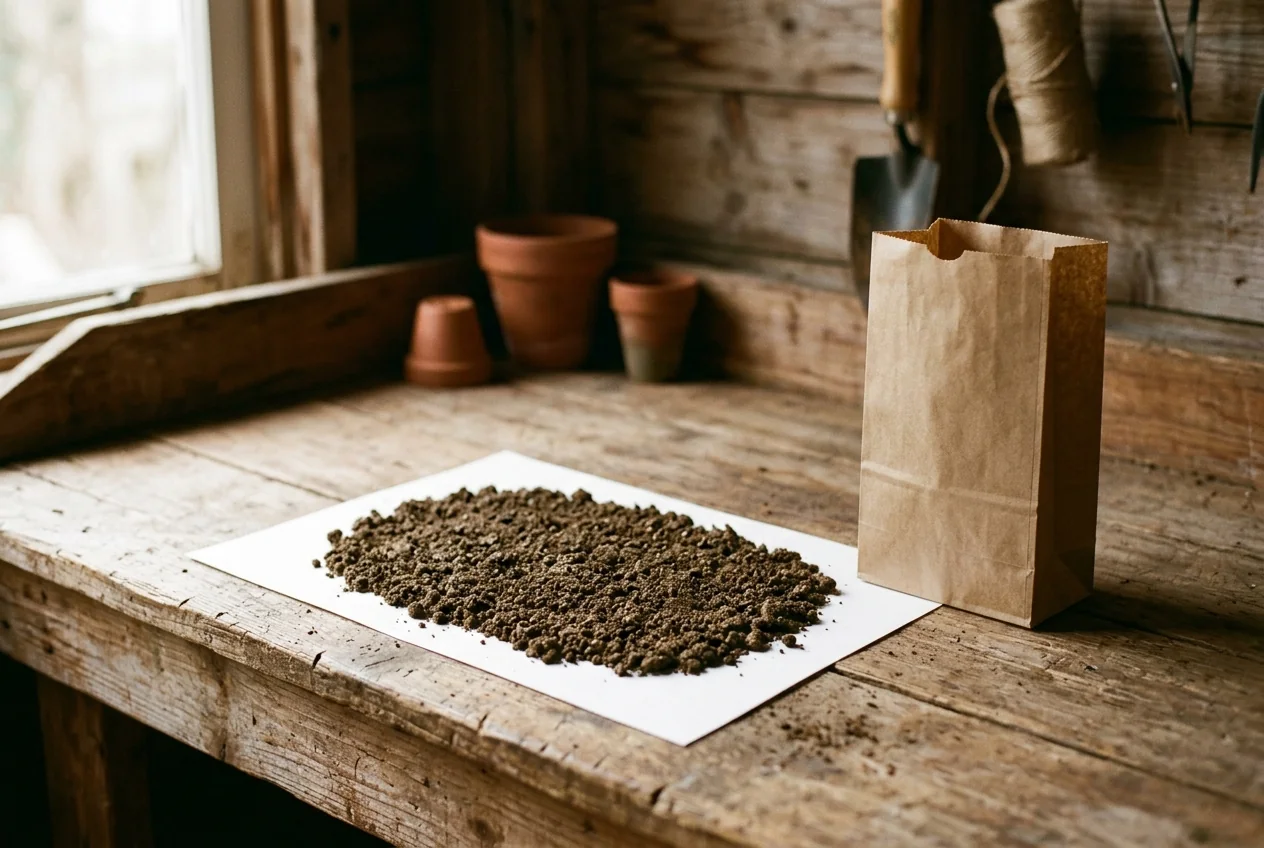
The bag pictured here does not prescribe a shipping container. NCDA requires its official soil box, with soil placed directly inside rather than in an inner bag, and says not to tape the box shut. Follow your chosen service’s container and closure instructions.
Before sending, compare the sample ID on the container with the worksheet, sketch and submission form. Include the intended crop and amendment history the service asks for; Cornell’s garden information list includes fertilizer and manure use. Check the current submission form for the test code, delivery and payment details instead of relying on an old article’s price or turnaround estimate.
After you receive the report, the next decision is which amendment, if any, it supports. The organic fertilizer guide covers matching nutrients and application calculations. This checklist stops at sample submission.
Method and limits
Updated 15 October 2026. We compared the NCDA&CS collection instructions, Cornell Cooperative Extension Sullivan County’s sampling FAQ, OSU Extension’s lab-selection Q&A, and Iowa State’s garden-soil guidance. The blank record and CSV are editorial organizing tools; we have not collected or analyzed a garden sample for this article.
We retain each source’s limits, leave Cornell’s conflicting garden-depth advice unresolved, and give no nationwide sampling depth. Testing for contaminants requires an appropriate test and interpretation; routine nutrient sampling cannot establish food safety. This independent publication is not the Texas farm that previously used this domain. More growing articles appear in the home-growing collection.