Applying a generic soaking or cold-shock routine to every oyster mushroom block after the first harvest can damage the substrate or kill warm-season mycelium. To grow a second flush of oyster mushrooms, clear leftover stem tissue from the harvest cut, check your kit supplier’s protocol for your specific oyster strain, and decide whether to hold steady while the block rests, rehydrate through the bag slit, cut a fresh opening, or contact the supplier.
Published kit protocols do not share a single soaking rule: Field & Forest Products instructs growers to leave its Grey Dove Oyster block in the fruiting space at 55–70°F and 85–90% humidity to refruit after 2–3 weeks without soaking, whereas Fat Fox Mushrooms recommends a 1-hour in-bag water soak and thorough drain only after a block feels much lighter or its slit dries out (checked October 2026). Use the supplier comparison and blank post-harvest log below to match care to your block and variety.
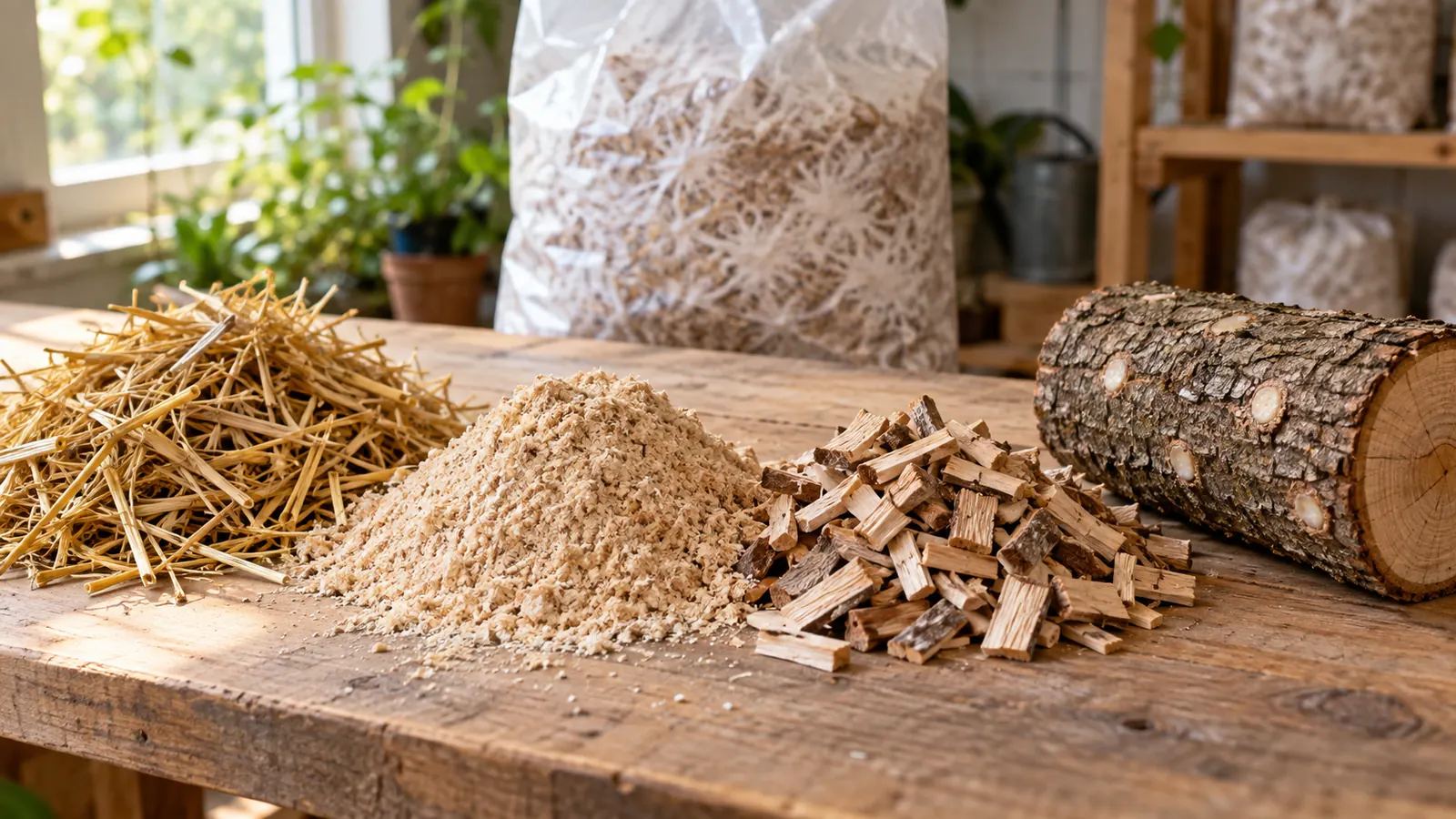
This guide is compiled from supplier instruction sheets and university extension notes by Known Source Farms, an independent information site in our mushrooms section. If you are choosing raw straw, sawdust or logs before starting a grow, see our mushroom substrate selection guide.
| Check before acting | Source example or your entry | Why it matters |
|---|---|---|
| Kit supplier and block format | Named instruction sheet or box manual | Rest time, bag retention and watering rules vary by producer |
| Oyster species or strain | Grey Dove, Blue, Yellow, or Pink Oyster | Fat Fox warns never to refrigerate Pink Oyster kits because cold kills the mycelium |
| Cut-site cleanup | All spongy stem remnants removed (Smallhold; UF/IFAS, Sept 2025) | Leftover mushroom tissue at the opening can invite mold or pests during recovery |
| Block weight and opening moisture | Condensation inside bag vs. block feeling much lighter (Fat Fox) | Separates blocks that only need misting from dried blocks whose supplier allows soaking |
| Surface condition | White mycelium vs. green, blue, black, or yellow spots (UF/IFAS, Sept 2025) | Rapid greenish Trichoderma or dark spots indicate contamination rather than normal rest |
Why shouldn’t you use a generic overnight soak on every oyster kit?
An oyster mushroom grow block is not a shiitake log, and different kit producers formulate and bag their blocks for different post-harvest routines. Borrowing a 12-hour or overnight tub soak from a general forum thread can leave standing water inside the filter bag, while putting a tropical oyster strain in the refrigerator can kill the mycelium outright.
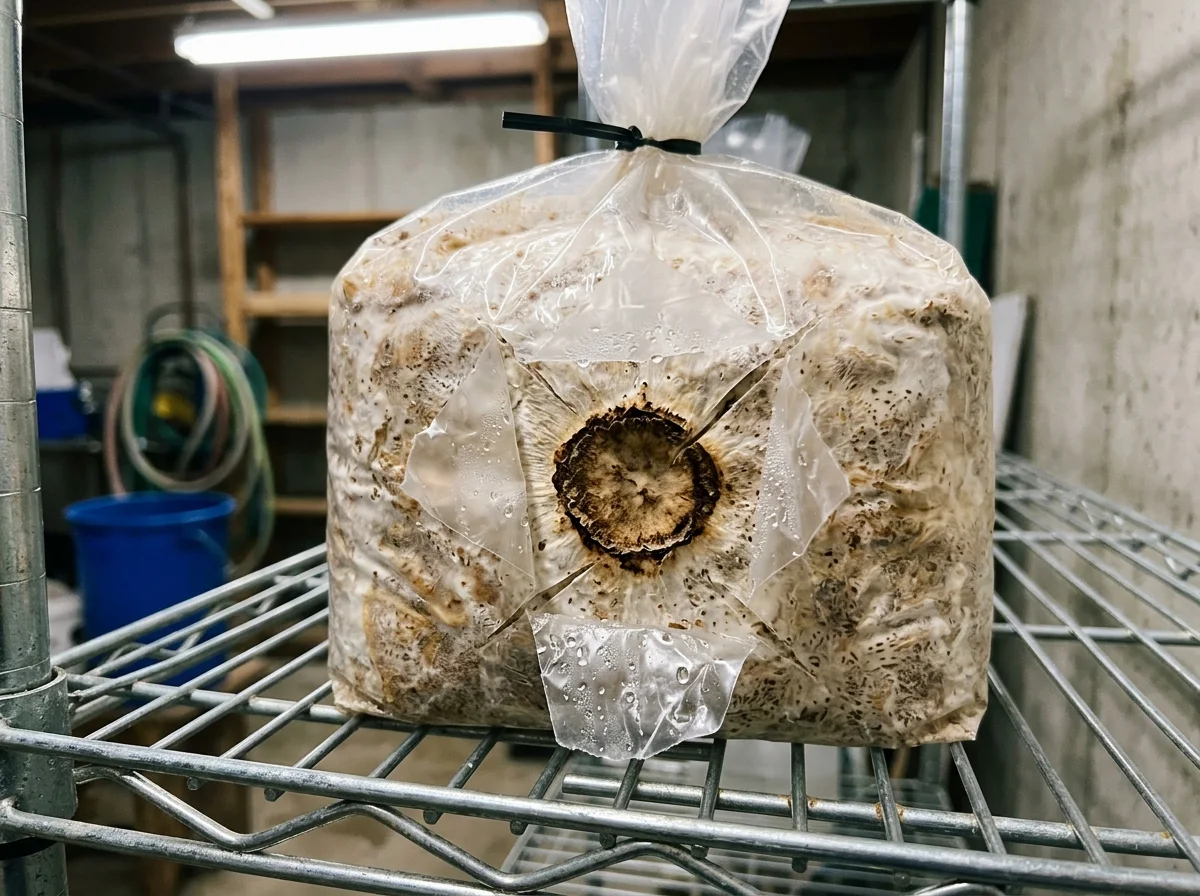
In a cached post-harvest guide read on 11 October 2026, Fat Moon Mushrooms gives a 12-hour water-tub soak and cool dry rest for shiitake blocks, but gives a completely different rule for its oyster and lion’s mane kits: mist multiple times a day and flip the block to cut a new gash if the first opening stalls. In a personal cultivation report updated 4 March 2021 (Under the Choko Tree), a home grower who tried an overnight water soak after two weeks of misting still got no second flush from oyster mushroom containers, later pointing to low ventilation (carbon dioxide buildup) and low fruiting-chamber humidity as the likely causes.
How do supplier second-flush instructions compare?
Each column in the table below applies only to the named producer’s block and species. Do not average the rest days or combine one company’s soaking step with another company’s sealed-bag setup.
| Supplier and document | Product and species covered | Keep plastic bag on block? | Rehydration and misting rule | Rest window and temperature / humidity | Explicit exclusions and limits |
|---|---|---|---|---|---|
| Field & Forest Products PDF (checked 17 Oct 2026) | Grey Dove Oyster (Pleurotus species) ready-to-fruit block | Yes; excess top bag folded tightly underneath block | No soak listed; continue maintaining room humidity (85–90%) and daily fresh-water misting under a lifted plastic tent if room is dry | Spontaneously fruits again after about 2–3 weeks rest at 55–70°F with >10 hr/day light and fresh air exchange | Yield per flush declines over 2–4 typical fruitings; exhausted blocks may develop green mold; only the first fruiting is guaranteed |
| Fat Moon Mushrooms blog (cached text read 11 Oct 2026) | Oyster and Lion’s Mane mushroom grow kits (contrasted with Shiitake and Pioppino) | Yes; if the first gash does not refruit, flip the block and cut a new gash in the bag | Mist the block multiple times a day; no tub soak for oyster kits (12-hr tub soak is listed for Shiitake blocks only) | New growth emerges in 7–10 days around prior growth edges or from the new gash; repeat first-flush care | Each flush produces fewer mushrooms; Pioppino blocks specifically need extra airflow or outdoor deck placement to avoid green mold |
| Smallhold blog (published 6 Nov 2023; cached text read 11 Oct 2026) | Spent hardwood sawdust and grain blocks (Blue Oyster, Yellow Oyster, Lion’s Mane, Royal Trumpet) | Keep cut sites intact; remove all leftover spongy mushroom tissue from the cut site | Keep the cut sites moist; no submersion soak specified in the post-harvest summary | Around 1 week recovery after harvest in temperate conditions (~63–70°F) | Blue Oyster, Yellow Oyster, and Lion’s Mane have the best chances of a second flush; Royal Trumpets are trickier because they fruit from the top; mold risk rises on successive grows |
| Fat Fox Mushrooms FAQ (checked 17 Oct 2026) | Multi-species mushroom grow kits (including Pink Oyster and Reishi) | Remove from cardboard box, do not remove from filter bag; tape old dried slits with packing/duct tape and cut new slits if needed | When block feels much lighter or slit dries out (usually after second flush), pour clean water through top slit, soak about 1 hour, then drain thoroughly | 2–5 weeks or longer (slower in cool winter temperatures) | Never refrigerate Pink Oyster or Blood Reishi (12–24 hr fridge cold shock kills their mycelium); never put any kit in the freezer; over-soaking or poor drainage harms growth |
Common mistake: Putting a Pink Oyster kit in the refrigerator overnight to “cold shock” it into pinning. Fat Fox Mushrooms explicitly warns that refrigeration kills Pink Oyster and Blood Reishi mycelium.
Step 1 — Clean the harvest scar and inspect the block for mold
Before waiting for a second crop, clean the opening where the first cluster grew. University of Florida IFAS Extension (publication SS662, revised 2 September 2025) notes that oyster mushroom clusters are harvested by twisting and gently pulling them from the bag or cutting them flush with the substrate with a knife, and Field & Forest Products likewise instructs twisting and pulling the cluster off when the cap edges flatten. Smallhold’s post-harvest guide adds a specific cleanup step: pick all leftover spongy mushroom tissue from the cut site so decaying stumps do not sit on the exposed substrate.
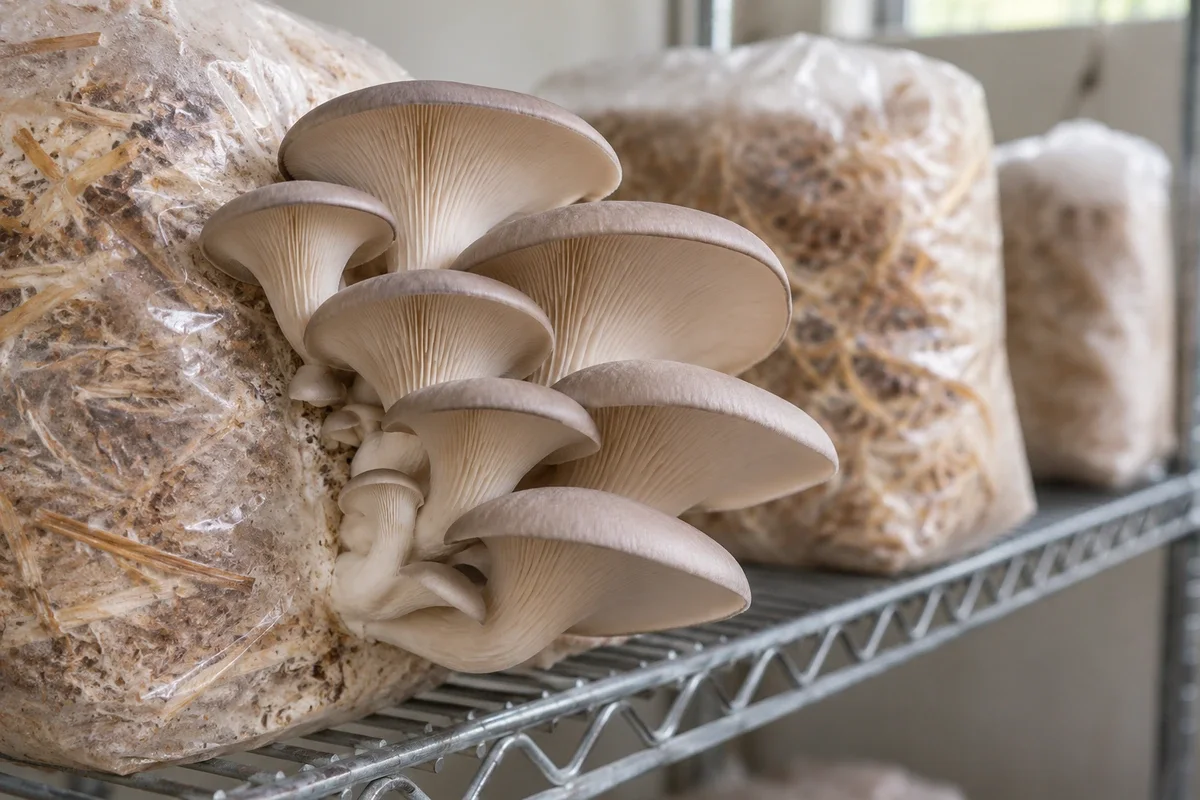
Inspect the exposed cut and the substrate visible through the bag at the same time:
- Healthy recovery appearance: Creamy-white to tan colonized substrate, firm block structure, and clean cut edges.
- Contamination warning signs: UF/IFAS Extension advises examining bags closely for blue, green, black, or yellow spots, which indicate unwanted fungi or bacteria such as rapid greenish Trichoderma mold. Both Field & Forest Products and Smallhold note that blocks become more vulnerable to green mold as they age across successive flushes.
- What to do if you see mold: UF/IFAS states that contaminated bags are best removed and discarded. If a commercial kit develops mold right after the first harvest, stop misting and send a photograph to your kit supplier rather than attempting to soak the block or judge whether nearby mushrooms are safe to eat.
Step 2 — Log your kit’s rules before changing water or temperature
Copy the table below or download the blank oyster second-flush observation log as a CSV to keep your kit’s instructions and your block’s physical condition on one sheet. Leave any unknown field blank until you check the supplier’s manual.
| Observation field | Your entry |
|---|---|
| Block ID and location in your home or grow space | ____________________ |
| Kit supplier and product name | ____________________ |
| Oyster species or strain (such as Grey Dove, Blue, Yellow, Pink) | ____________________ |
| Supplier instruction page or sheet; date checked | ____________________ |
| First-flush harvest date; caps picked before heavy spore drop? | ____________________ |
| Cut-site cleanup completed (all spongy stem tissue removed)? | ____________________ |
| Bag and slit status (original slit kept / old slit taped and new slit cut) | ____________________ |
| Post-harvest block weight or feel (still heavy vs. much lighter) | ____________________ |
| Supplier rest window before next pinning | ____________________ |
| Supplier rehydration rule (mist only / 1-hr in-bag soak / other) | ____________________ |
| Cold-shock rule (confirm species; never refrigerate Pink Oyster) | ____________________ |
| Room temperature and daily light hours | ____________________ |
| Humidity tent or misting schedule and fresh air exchange | ____________________ |
| Contamination check (any green, blue, black, or yellow spots?) | ____________________ |
| Decision: hold and wait / rehydrate per supplier / cut new slit / contact supplier | ____________________ |
Step 3 — Choose one post-harvest action that matches your block
Once the log has your supplier’s parameters and your block’s condition, pick the single branch that fits:
- Hold steady and wait through the rest period. If the block still feels heavy, shows moisture inside the bag, and has no mold, keep it in its fruiting spot and maintain humidity and fresh air exchange. Smallhold notes about 1 week of recovery at ~63–70°F; Fat Moon lists 7–10 days with daily misting; Field & Forest lists approximately 2–3 weeks at 55–70°F and 85–90% humidity; and Fat Fox notes 2–5 weeks or longer in cool winter rooms.
- Rehydrate in the bag only if the block is light and your supplier recommends it. When a kit follows Fat Fox’s protocol and feels much lighter after fruiting, keep the block inside its filter bag, pour clean water in through the top slit, soak for about 1 hour, and drain all excess water thoroughly. Do not leave stagnant water pooled in the bottom of the bag.
- Tape a dried opening and cut a fresh slit. If the original slit has been open for weeks and the mycelium right at the cut has dried out while the rest of the block remains firm and white, Fat Fox recommends taping the original slits shut with packing or duct tape and cutting new slits in another face of the bag (Fat Moon similarly suggests flipping the block and cutting a new gash).
- Maintain fresh air exchange alongside humidity. Field & Forest warns that if you drape clear plastic over a block to hold humidity, you must still lift the tent to mist and provide fresh air exchange; without enough fresh air, high carbon dioxide causes malformed or long-stemmed mushrooms and can stall normal development.
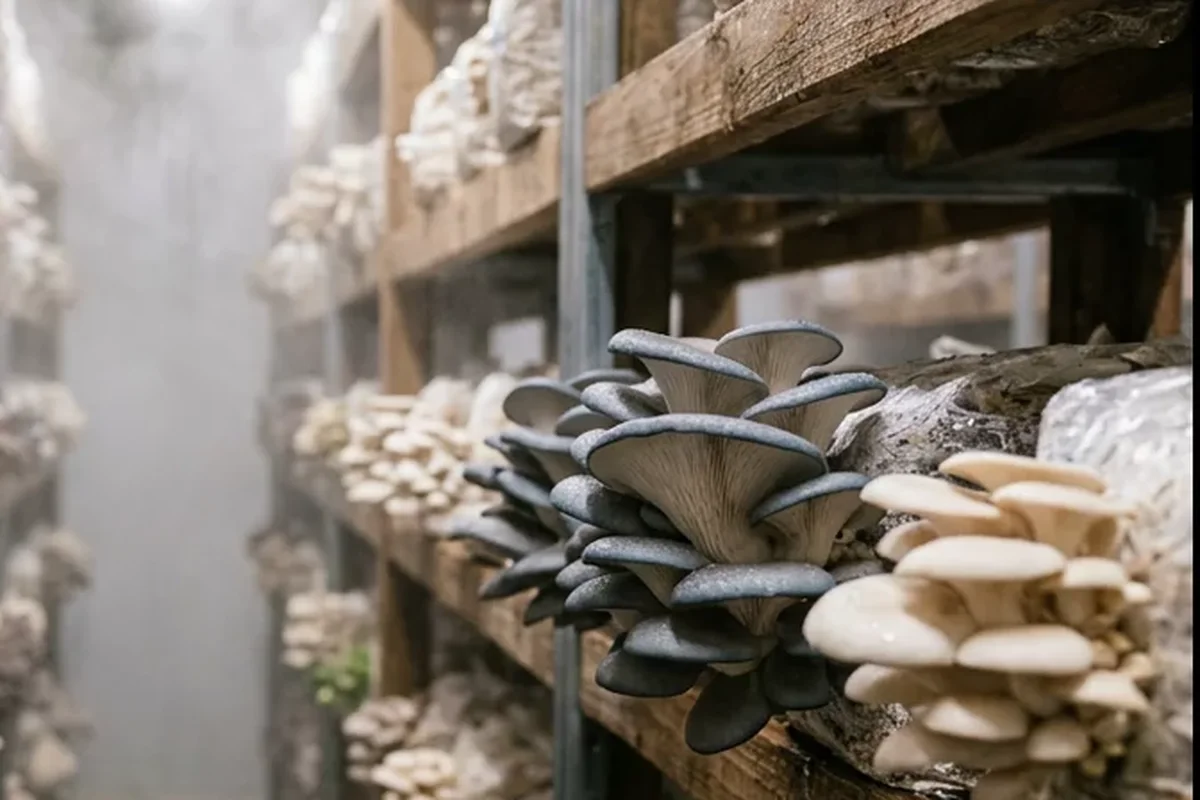
Takeaway: Expect each subsequent flush to produce fewer mushrooms than the first as the mycelium consumes nutrients and moisture (Field & Forest; Fat Moon; Smallhold).
When this guide does not apply
This guide covers care after a completed first harvest on a cultivated oyster mushroom grow kit or ready-to-fruit block. It does not cover:
- A kit that never fruited on its first flush: First-flush stalls involve initial bag setup, shipping stress, or supplier warranty policies—contact your kit vendor directly with photos and your batch number.
- Preparing raw substrate or grain spawn from scratch: Choosing between pasteurized straw, supplemented sawdust, and hardwood logs is covered in our mushroom substrate guide.
- Using spent mushroom substrate in garden beds: Once a block is exhausted after 2–4 flushes, its role shifts to compost or soil organic matter; see how organic matter differs from measured crop nutrients in our organic fertilizer guide and our explainer on compost, compost tea and leachate.
- Wild mushroom identification or edibility judgments: Never use cultivation guides to identify wild fungi or to decide whether mushrooms growing near mold spots are safe to eat.
Method and sources
Updated 17 October 2026. We compiled this comparison from Field & Forest Products’ Grey Dove Oyster ready-to-fruit block instructions (checked 17 October 2026), Fat Fox Mushrooms’ post-harvest kit FAQ (checked 17 October 2026), University of Florida IFAS Extension publication SS662 (D.I.Y. FunGuide: Grow Your Own Oyster Mushrooms at Home, revised 2 September 2025, checked 17 October 2026), and cached page texts from Fat Moon Mushrooms and Smallhold (read 11 October 2026; direct origin requests returned HTTP 429 rate limits on 17 October 2026, so no fresh origin response is implied for those two pages), alongside a personal grower failure report on Under the Choko Tree (updated 4 March 2021).
The comparison table and downloadable CSV log are editorial organizing aids; we have not run kit trials, do not recommend brands, and do not guarantee a second flush. Known Source Farms is an independent editorial publication and is not the Texas farm business that previously used this domain. Browse more cultivation guides in our mushrooms section.