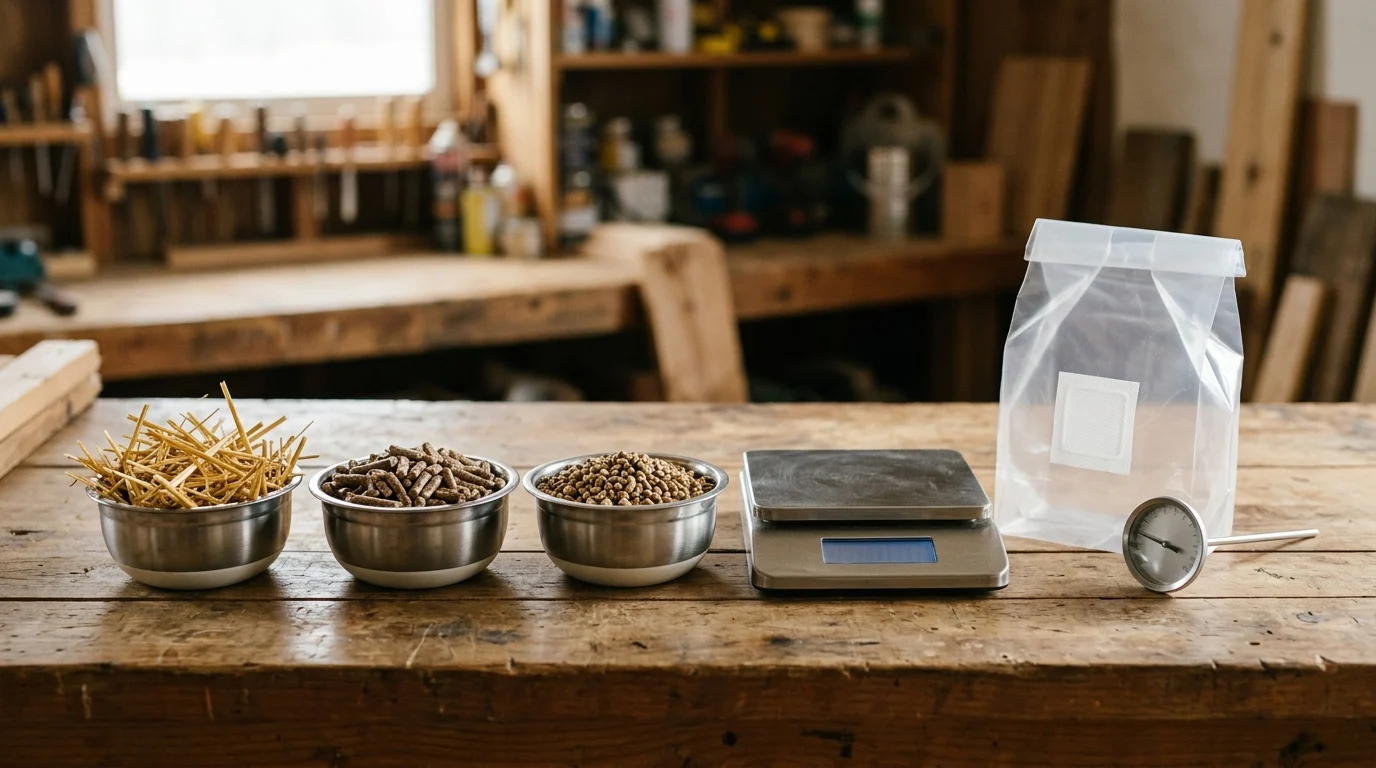
Choose your rate basis before using this mushroom substrate calculator: dry substrate or hydrated substrate. Enter the corresponding batch weight and the spawn percentage from your cultivation protocol.
Spawn amount depends on substrate, method, workspace cleanliness, and desired colonization speed.
Calculate your batch
Select a calculation route, then enter your batch details. Use the dry-ingredients route when planning retained water; use the weighed route for a prepared batch.
Keep the weights separate
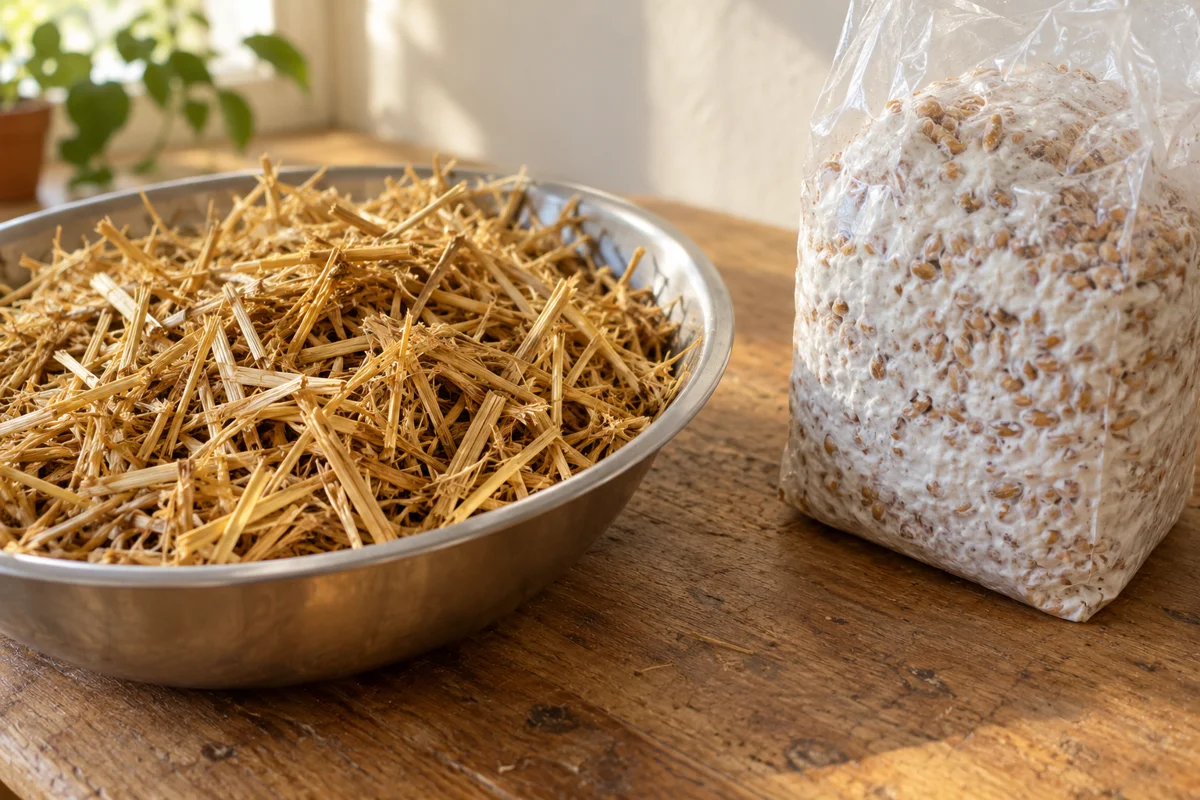
Spawn is living mycelium grown onto a substrate.
Substrate is material that serves as food for mushroom mycelium.
Dry sample weight is the sample weight after drying.
Wet-basis moisture is water as a percentage of hydrated substrate weight.
Use these mass-balance relationships with dry ingredients and retained water:
Dry ingredient mass = hydrated substrate mass × (1 − moisture percentage / 100).
Retained water mass = hydrated substrate mass − dry ingredient mass.
Finished mixture mass = hydrated substrate mass + grain spawn mass.
For the calculator, choose the substrate denominator explicitly:
- Dry-basis input: enter dry substrate mass and the dry-basis spawn percentage.
- Hydrated-basis input: enter substrate mass before adding spawn and the hydrated-basis spawn percentage.
- For either input, multiply the selected mass by the spawn rate expressed as a fraction.
Which spawn to substrate ratio should you enter?
Choose the protocol for your species and substrate, and keep its stated basis attached to the rate.
Substrate requirements differ between mushroom species.
For its oyster mushroom pasteurized-straw protocol, UF/IFAS specifies a spawn rate of 5–10% on a volume/volume or weight/weight basis.
The reported Pleurotus research used spawn amounts up to 5% of substrate wet weight.
For Agaricus bisporus compost, Penn State describes 1–2% Dry Weight as a low spawning rate.
Use the weight/weight convention for this form. Keep any volume-based recipe in its own measurement system.
Worked example: dry ingredients to hydrated mass
At 60% moisture, use 1.5 kg water per 1 kg dry ingredients, assuming dry ingredients and all water retained.
Example hydrated substrate mass: 1 kg + 1.5 kg = 2.5 kg.
Use the reported Pleurotus upper rate only as the arithmetic input for this example.
Example spawn mass at 5% of hydrated substrate: 0.125 kg.
Example finished mixture mass, including spawn: 2.625 kg.
Weigh the prepared batch
Weigh the hydrated batch before portioning because ingredient moisture and absorption vary.
Withholding water, evaporation, or drainage lowers actual prepared substrate weight relative to the calculator target.
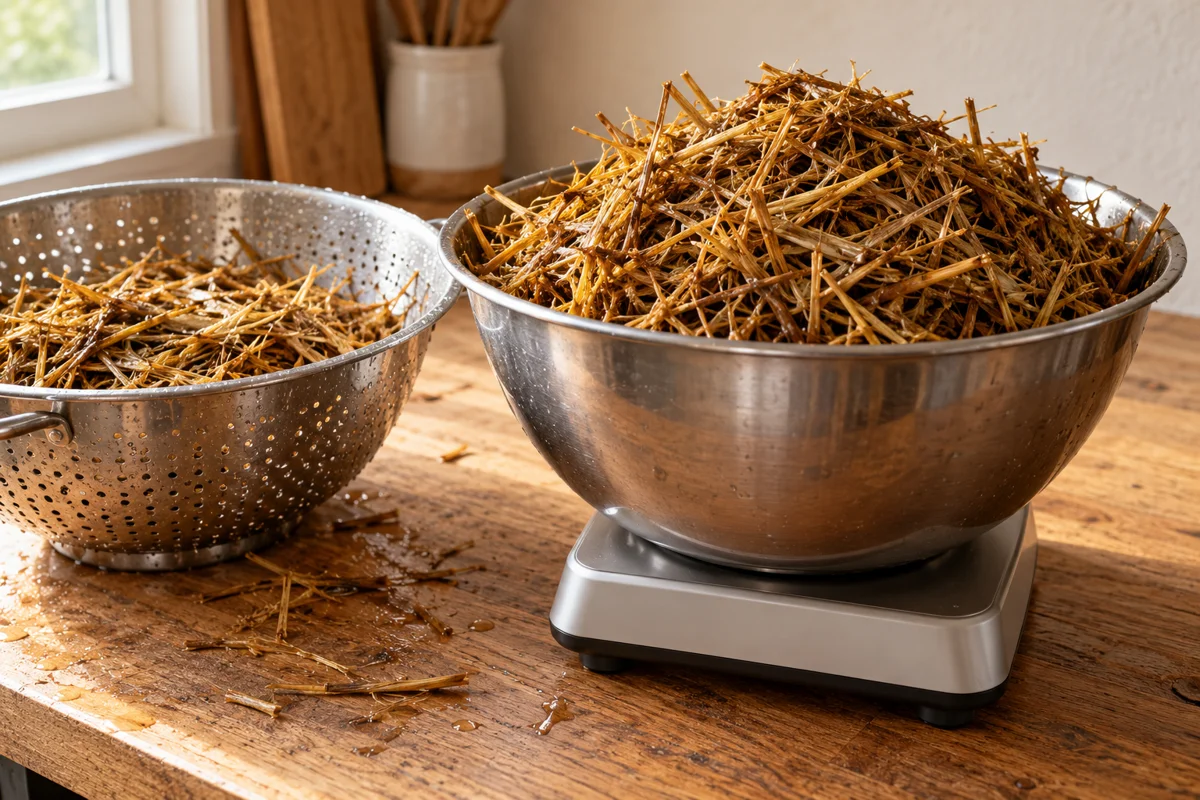
Return to the weighed-substrate route after preparation and enter your recorded weight. For preparation steps, continue to our substrate recipe and pasteurization guide.
After calculating: mixing and colonization
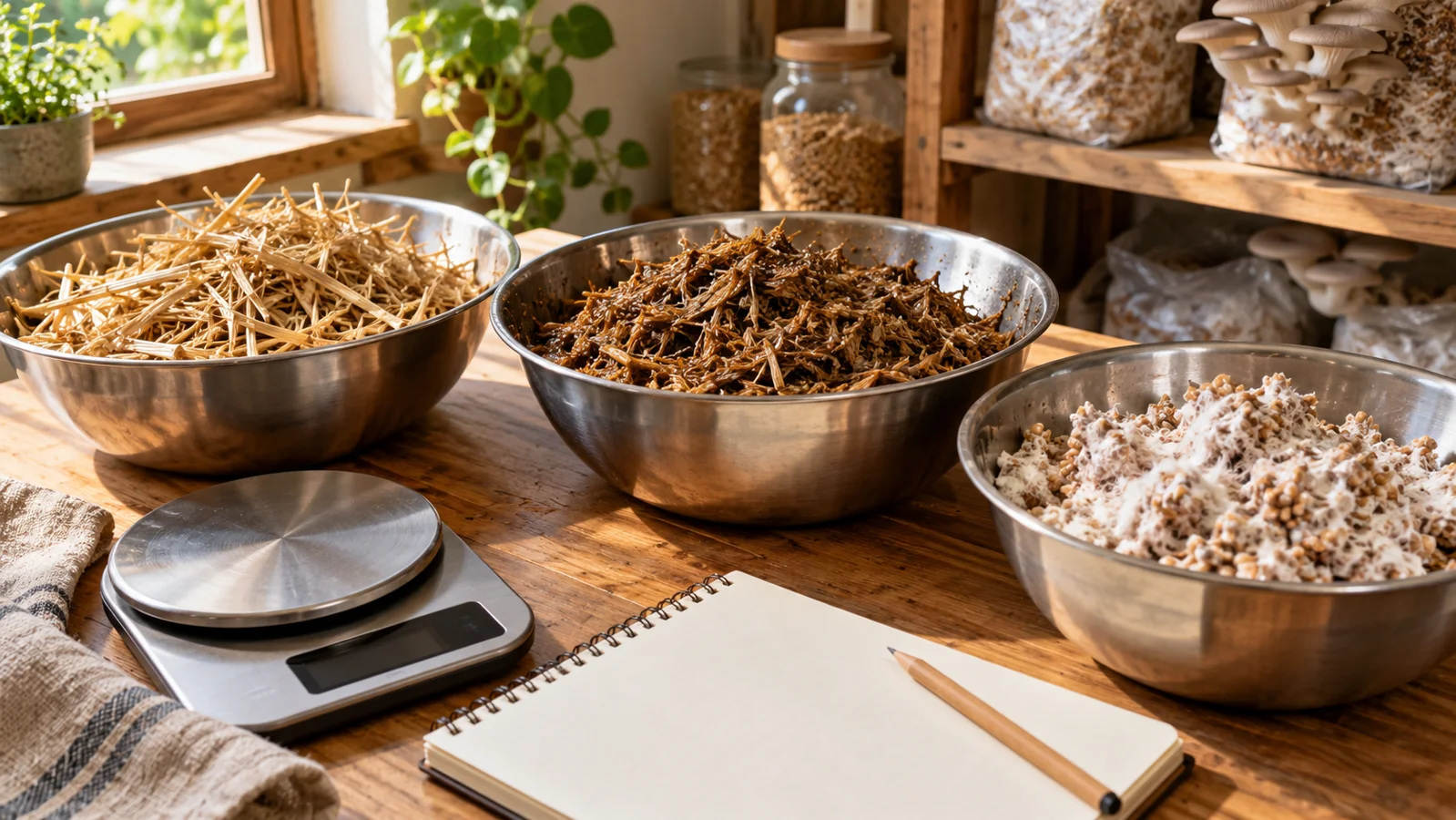
In the oyster straw protocol, straw and spawn may be mixed before bagging or added in alternating layers.
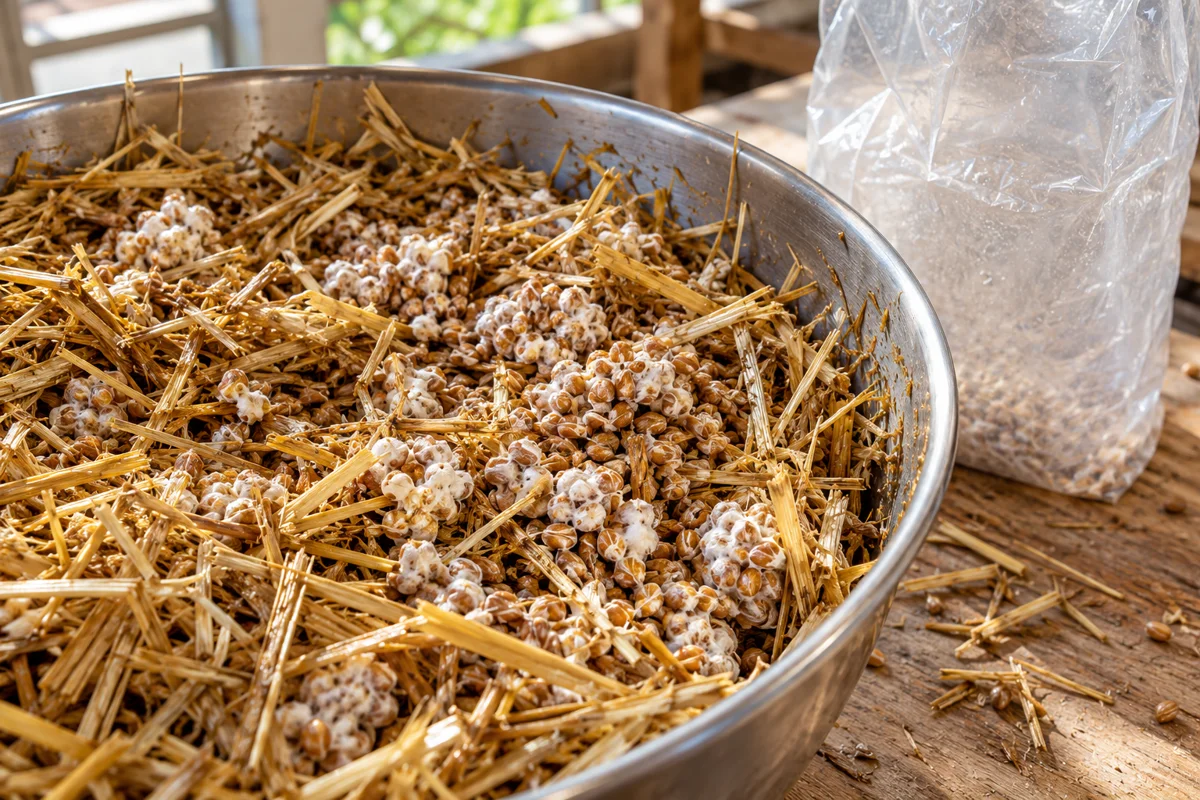
Spawn-run rate varies with substrate density and mushroom species.
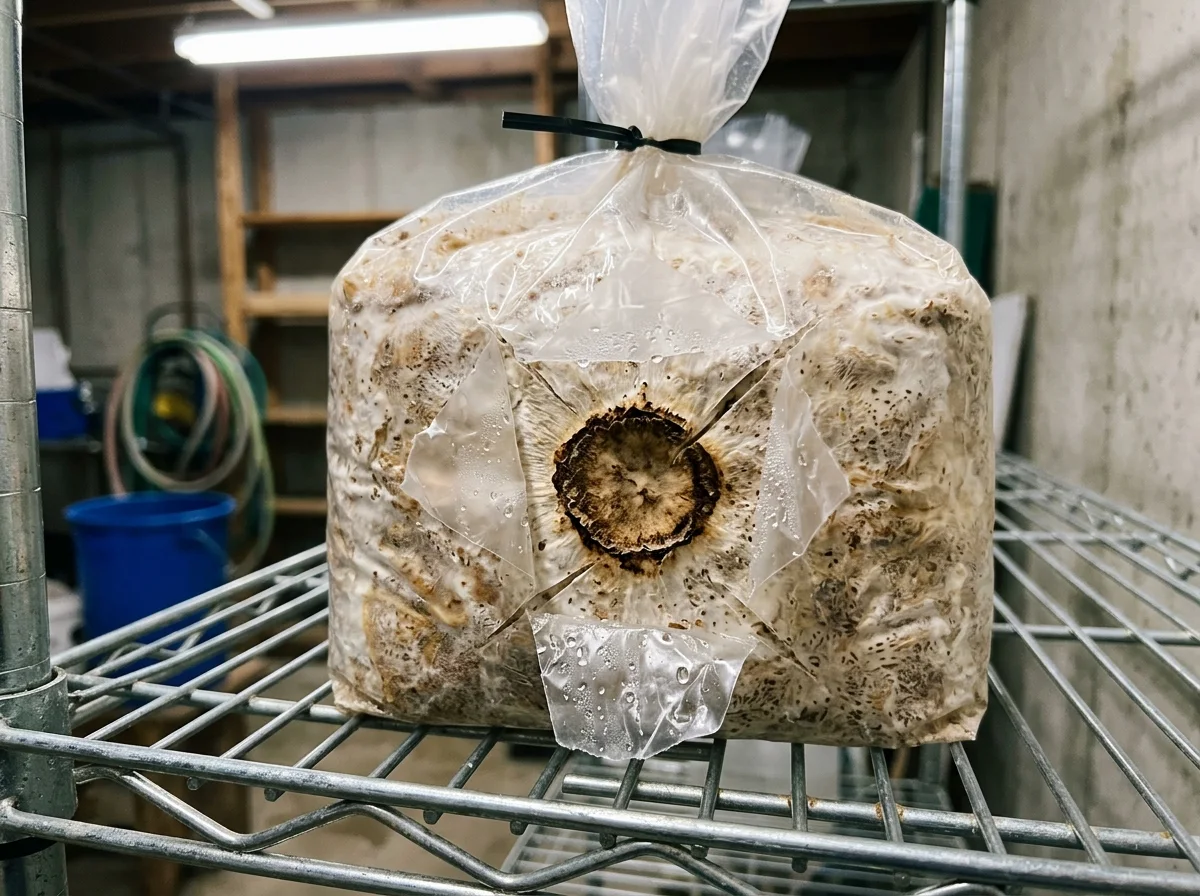
Full colonization precedes initiation into fruiting.
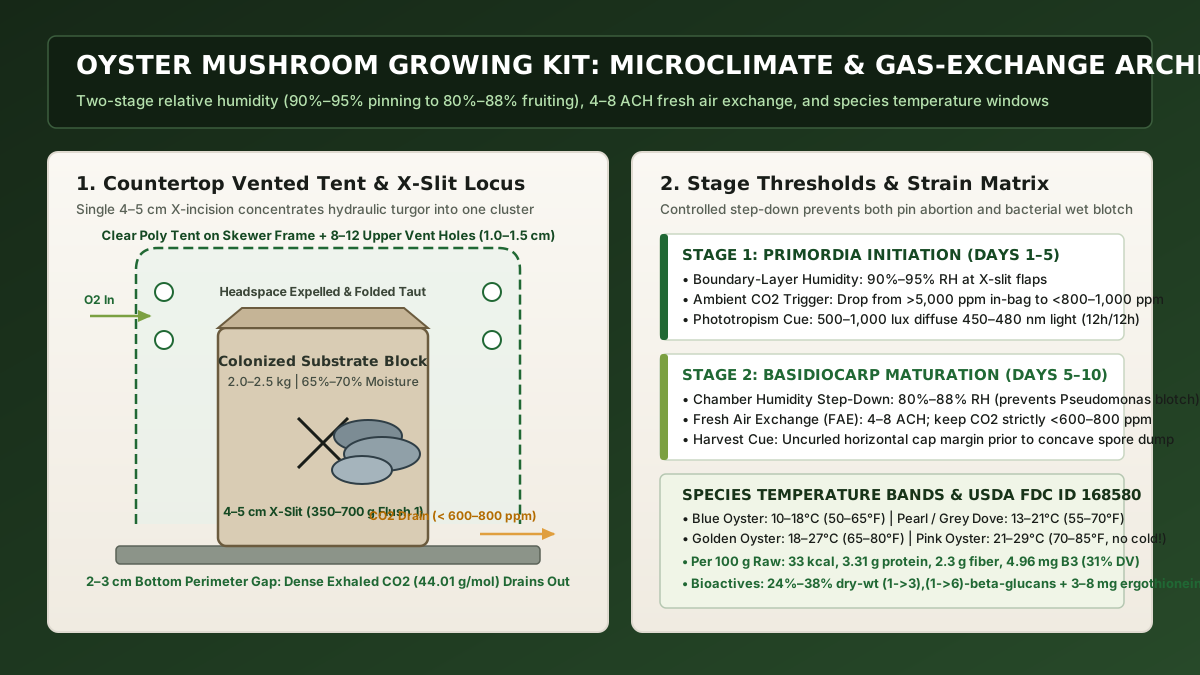
Oyster pinheads expand into the first flush if proper air exchange and humidity are maintained.
Check your batch record
Before mixing, review:
- The species and substrate protocol you selected.
- The rate and its dry-substrate or hydrated-substrate basis.
- The substrate weight entered before spawn.
- The water retained after preparation.
- The spawn quantity and finished mixture total.
Need to revisit material selection? Read the mushroom substrate guide, or browse the growing library.
Common calculation questions
Can I turn container volume into weight?
Hydrated CVG and colonised grain do not have one fixed density.
Use a weighed batch for this calculator.
Does more spawn mean more mushrooms?
A higher inoculation rate likely does not produce more mushrooms from the substrate.
Using more spawn raises input cost.
What belongs in the finished mixture total?
The calculator finished bag weight includes dry ingredients, retained water, and entered grain spawn.
Sources
- North Spore — Mushroom Spawn FAQ
- Cornell Small Farms — Seven Stages of Cultivation
- Cornell Composting — Moisture Content
- UF/IFAS — D.I.Y. FunGuide: Grow Your Own Oyster Mushrooms at Home
- Penn State Plant Pathology — Production Technology
- Penn State Extension — Seeding Substrate and Management of Growing Agaricus Bisporus
- NCAT — Mushroom Cultivation
- Artisan Mushrooms — Mushroom Substrate Calculator